Resource Library
Incentive Programs
Relying heavily on advertising revenue and contracts to maintain programming excellence, Viacom knew they needed a special program to combat diminishing business due to the soft economy and failing technology sector. Utilizing the concept of “Themed Time Travel,” Incentive Travel created a program for Viacom that built business with its top advertisers while creating a "once in a lifetime" travel experience even among a well- traveled audience.
... [ read more ]
Managed by Synchro since 2002, the Toyota Sales Society 2007 program encompassed all customer-facing Vehicle Sales and AfterSales (accessories, parts, service) staff in TMC Australia’s 224 dealerships. This includes 3,539 retail and fleet sales managers, retail and fleet sales consultants, parts managers, parts sales representatives, parts interpreters, service managers, service advisors; and used vehicle managers from every state in Australia.... [ read more ]
Each year in the United States, organizations spend tens of billions of dollars on cash and non-cash rewards for consumer, distributor, sales and employee incentive programs –merchandise, gift cards, group and individual travel programs, time off, cash, etc. But few organizations invest the necessary time to understand which rewards should be used for which people to encourage what outcomes... [ read more ]
Historically, incentive programs, unlike other sales and marketing strategies, have endured economic downturns. In fact, according to a review of past Incentive Federation and industry studies, the incentive industry managed to grow following the recessions that occurred in the late 1980s, after September 11, 2001, and during the downturn of the late 1990s, following the dot-com collapse. In fact, there is no evidence that the industry suffered serious declines following the recession in the late 1970s/early 1980s, and the industry continued to prosper even during the Great Depression when the industry’s trade magazine at the time, Premium Practice, was filled with advertising pages.... [ read more ]
In spite of Mountain Dew's strong market position, Pepsi-Cola wanted to build the brand's loyalty, attract new customers, and keep the growth rate above the industry average. To achieve those goals, the company developed the "Extreme Network" promotion, which offered a beeper in exchange for 10 Mountain Dew proofs of purchase, $29.99, and $5 for shipping and handling. The numeric pagers came with six months of free service. Total value: $125.
... [ read more ]
Leadership
Published: Feb 20, 2018

Over the last few years, the recognition field has seen a significant shift from traditional length-of-service awards to programs that focus on supporting critical organizational goals -- quality service to internal or external customers, participation in volunteer initiatives, a willingness to go the extra mile, etc. ... [ read more ]
Published: Mar 24, 2016

It aligns efforts toward common goals. Marketing, communications and internal marketing efforts yield better results when all communications, learning and management training are aligned toward common goals. ... [ read more ]

Engagement doesn’t just happen, and in most organizations frontline management has a lot to do with the success - or failure - of an organization's engagement efforts. Recent research from the Gallup organization on employee disengagement ... [ read more ]
Published: Mar 15, 2012
Employee surveys have the potential to help companies understand the relationship between human capital and the bottom line. Yet, if not managed carefully, surveys may fail to realize their potential as strategic organizational tools. Why? Because many organizations are successful in designing reasonable questionnaires, generating high participation rates and gathering a lot of good information. But where survey processes most commonly break down is in the “hand off” between a survey team, perhaps working with the assistance of an outside consultant, and line managers throughout the organization.... [ read more ]
This study delves into the mechanics of sales incentive programs, providing managers with useful information to design successful sales initiatives at their own companies and providing their corporate decision makers with hard evidence. It found that properly structured programs can increase sales by at least 10 percent. ... [ read more ]
The Psychologically Healthy Workplace Program (PHWP) is a collaborative effort between the American Psychological Association and the APA Practice Organization, designed to educate the employer community about the link between employee health and well-being and organizational performance. It offers an awards program and sponsors an annual Psychologically Healthy Workplace conference, among other activities.... [ read more ]
Published: Nov 4, 2015
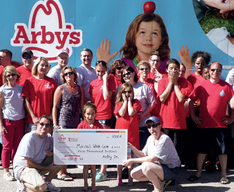
There’s a spirit of energy at Arby's, where new CEO Paul Brown and his team are bringing innovation to products and services, as well as employee and franchisee relations. Coming off 18 consecutive quarters of same-store sales growth, Arby's is considered a star in the industry, rivaling (and even outpacing) the success of Chipotle. ... [ read more ]
This study, sponsored by the Incentive Research Foundation (IRF), looks at questioins that are rarely posed in relation to sales incentive programs: How do sales incentives affect procurement and cost of goods? Shipping? Cash flow? It suggests that developing an incentive program with a focus on sales growth alone, with no consideration for other business functions can produce 1) an adverse affect on cash flow, 2) a possible disruption in supplies, 3) extra shipping costs for ordered merchandise, and 4) a possible impact on customer quality. A "business process" approach, on the other hand, one that takes into account the impact on other business functions, "enables the planning and creation of the needed infrastructure and additional investments, where necessary, to support the results arising from the sales incentive program," the author says.... [ read more ]
Published: Jan 31, 2012

This well-known author and Harvard professor has strong words for business about the importance of engagement.... [ read more ]
Published: Jun 21, 2016

Few people in academia better understand the convergence of analytics and Enterprise Engagement than Charles Scherbaum, Associate Professor of Psychology at Baruch College and a member of the doctoral faculty at the Graduate Center of the City University of New York. Scherbaum, an early contributor to the Enterprise Engagement Alliance curriculum on analytics... [ read more ]
The Brand Activation Association has a broad focus on all the disciplines required to activate a brand's strategy, from creative strategies to measurement, on topics from omni-channel marketing to experiential marketing and social media. BAA builds on its membership knowledge base, spanning expertise in strategy through activation, and across all touch points.... [ read more ]
Published: Apr 12, 2021
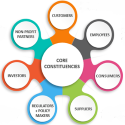
Corporate Social Responsibility is not just about charitable giving--it is becoming not only a competitive advantage but an organizational requirement. ... [ read more ]
Published: Jun 15, 2015

This first in a series of three white papers on Customer Engagement from Rosetta Consulting is based on the findings of the 2014 Rosetta Consulting Engagement Study and focuses on how business leaders approach customer engagement. Researchers found clear... [ read more ]
This position paper from Meetiing Professionals International (MPI) examines a partnership business model, identifies critical ways in which meetings drive business, and looks at the key components and objectives of a thriving strategic meetings management program.... [ read more ]
A common error that frontline managers sometimes make is to focus their performance improvement efforts on employees’ weaknesses, rather than focus on their strengths. But Gallup research shows that the worst thing managers can do is to ignore their employees altogether. According to Gallup researchers Brian Brim and Jim Asplund, “If your manager focuses on your strengths, your chances of being actively disengaged at work are only 1 in 100. If your manager ignores you, however, you are twice as likely to be actively disengaged than if your manager focuses on your weaknesses. Being overlooked, it seems, is more harmful to employees’ engagement than having to discuss their weaknesses with their manager.” This paper offers a summary of their research.... [ read more ]
Published: Apr 8, 2015

Leading-edge companies are tapping the potential of advanced analytics to improve talent acquisition, employee engagement, retention, talent development and, ultimately, their bottom lines. Soon this will be the... [ read more ]
Published: Feb 7, 2012

Author, Professor and Coach Terry Pearce discusses the correlation between the engagement of individual employees and the communication from senior executives.... [ read more ]
This study, by Prof. James Oakley of Ohio State University, found a clear link between employee engagement and customer satisfaction, and customer satisfaction and profitability.... [ read more ]
This study, by Prof. James Oakley of Ohio State University, found a clear link between employee engagement and customer satisfaction, and customer satisfaction and profitability.... [ read more ]
Published: Feb 23, 2015
Issues related to employee and customer engagement are at the top of the list of CEO challenges worldwide, according to CEO Challenge 2015, an annual survey of... [ read more ]
Showing Results 726 - 750 of 1128