Resource Library - Research
Customer Engagement
Published: Mar 2, 2016

In the old days, when no one could measure the economic benefits of engagement, it was a "nice to have." Now it’s essential. It's a critical competitive edge. With sales growth slowing and competition continuing to grow in many industries, market share goes to those organizations that "wow" not only their ... [ read more ]
Published: Jan 18, 2017

This is the first installment of a three-part series on the creation of engagement standards, their evolution, research supporting them and potential implications.... [ read more ]
Published: Jan 23, 2017

The decision in 2015 by the stewards of ISO 9001 to create Quality Management Principles that include engagement is supported by both researchers and workplace observers who have observed ISO standard compliance in action. A study of ISO compliance... [ read more ]
Published: Feb 6, 2017

So what will happen should ISO go beyond the issuance of its Quality Management Principles and eventually approves formal standards for engagement? The opportunity could be significant, says Lee S. Webster, Secretary for ISO TAG 260, which has oversight over the engagement standards.... [ read more ]
Published: Jun 15, 2023

This "model" human capital report condenses the longer profile of the "ideal" practitioner of Stakeholder Capitalism - a fabricated organization known as IMC, an integrated communications company. See ESM: -"The Perfect Company: Anatomy of an Ideal Practitioner of Stakeholder Capitalism." This model was created to help organizations of all sizes visualize the format and contents of a human capital report based on ISO 30414 Human Capital reporting standards for employees and ISO 10018 People Engagement standards for customers, channel and supply chain partners, and communities. ... [ read more ]
Published: Aug 11, 2015

A critical element of Enterprise Engagement involves studying the diverse audiences and specific engagement levers that need to be addressed in order to understand the facts behind certain key assumptions. Research plays a major role in that effort. ... [ read more ]
Published: Aug 17, 2017

In his book, Payoff: The Hidden Logic That Shapes Our Motivations, behavioral psychologist Dan Ariely details an experiment that pitted three motivators against each other. ... [ read more ]
Published: Jun 21, 2016

Few people in academia better understand the convergence of analytics and Enterprise Engagement than Charles Scherbaum, Associate Professor of Psychology at Baruch College and a member of the doctoral faculty at the Graduate Center of the City University of New York. Scherbaum, an early contributor to the Enterprise Engagement Alliance curriculum on analytics... [ read more ]
Promotional products foster customer goodwill (positive attitudes and feelings) toward a company and its salespeople. This study, completed by Baylor University in 1992, involved a textbook publisher sending 4,000 educators either: (1) a pocket calculator plus a letter, (2) a lower-priced highlighter pen plus a letter, or (3) a letter only.... [ read more ]
Published: May 31, 2017

The larger or more geographically spread out the organization, the greater the issues related to diversity. Beyond the regulatory and ethical obligations to recruit employees and market to customers... [ read more ]
This study, by Prof. James Oakley of Ohio State University, found a clear link between employee engagement and customer satisfaction, and customer satisfaction and profitability.... [ read more ]
Published: Sep 14, 2015
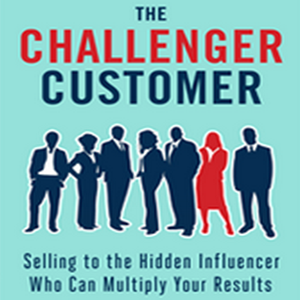
A new book, The Challenger Customer: Selling to the Hidden Influencer Who Can Multiply Your Results, provides a perspective on the current B2B selling environment that’s essential reading to anyone interested in sales force and customer engagement. We put this book in the "wow" category for ... [ read more ]
Published: Apr 19, 2022

Close observers of the Stakeholder Capitalism movement will note that there is much talk, but little apparent action beyond public pronouncements and donations. ... [ read more ]
Published: Nov 15, 2017

The 10018 Guidelines on People Involvement and Competence were created by the ISO (International Organization for Standardization) Technical Committee ISO/TC 176, Quality management and quality assurance, Subcommittee SC 3, Supporting technologies. These standards are based on ... [ read more ]
Many traditional forms of advertising and promotion are losing ground to newer media. This trend presents opportunities for the promotional products medium. However, very little research exists documenting the effectiveness of promotional products when compared to and combined with other traditional forms of advertising such as television and print.... [ read more ]
The Incentive Research Foundation (IRF) surveyed industry professionals during the month of April 2010, asking them about incentive travel programs, merchandise/non-cash programs, and ROI/budget considerations. The most promising data show that respondents appear to be more optimistic about the current economic climate than they were in either the Summer or Fall of last year. When asked, "In your opinion, what impact will the economy have on your ability to plan and implement incentive travel programs?" 69% say it will have a positive impact vs. only 33% in the Fall of 2009 and just 24% in the Summer of 2009. Similarly, those who say the economy will have a positive impact on merchandise/non-cash incentive programs increased from 20% (Summer '09) and 26% (Fall '09) to 41% currently. Still, one-third of those surveyed predict that budgets for incentive travel will decrease this year, while 37% say they'll remain unchanged. Things were a little better on the merchandise/non-cash side, where only 22% expect a decline (down from 51%), while 40% predict an increase and 37% say they see no change in budgets. This indicates that although there's an uptick in optimism about the economy in general, it may not translate into more money for programs – at least not in the near term. ... [ read more ]
Published: Sep 13, 2021

Social media, blogs, and e-newsletter technology enable almost any organization to become its own media company to generate leads, enhance thought leadership, build relationships and enhance sales ratios. Very few in business implement strategic integrated communications programs, often because they lack the people with the journalistic and other content creation skills needed for effective content marketing or they fail to integrate the communications programs into their sales and support process. ... [ read more ]
Published: Nov 2, 2015

Verint Systems recently released the results of new research it conducted in partnership with the consulting firm Ovum. The findings, say researchers, reinforce the demand for "quick and convenient service coupled with a calculated approach to personalization in order to foster customer engagement." Some highlights: ... [ read more ]
Most leaders and organizations know the difference between a fully engaged worker and one that is marginally engaged or disengaged. The former brim with enthusiasm, they contribute ideas, are optimistic about the company and its future, are seldom absent from work, they typically stay with the organization longer and are among the organization’s most valuable ambassadors. Disengaged workers, on the other hand, are often absent (even when they are at work). They are disconnected and often pessimistic about change and new ideas. They have high rates of absenteeism and tend to negatively influence those around them, including potential customers and new hires. And the cost of disengagement to U.S. employers is estimated to be as much as $350 billion per year.... [ read more ]
Are there differences in how a computer manufacturer plans and implements an incentive program versus how a pharmaceutical company or new car dealer does? What about a commercial banking operation, insurance agency or a telecommunications company? Are there processes, types of incentives used, or other nuances that are unique to these markets? Which industries are more likely to develop their programs in-house, as opposed to securing an outside vendor? The Vertical Market Study attempts to answer these and other questions. It provides a full report on how the six specific industries planned and implemented incentive travel,
motivational meetings and special events.... [ read more ]
Published: May 28, 2019

Despite hundreds of billions of dollars spent annually by organizations to engage employees and customers, numerous independent research studies find that neither employee nor customer engagement have improved appreciably in more than a decade. ... [ read more ]
Published: Jan 18, 2021

Conceived in the 1990s, the concept of Total Rewards represented a revolution in thinking related to compensation that to this day has not been fulfilled at many organizations, that is: a strategic, holistic approach to compensation that considers every aspect of the employee experience and his or her capabilities and potential contributions to the organization. ... [ read more ]
Each year in the United States, organizations spend tens of billions of dollars on cash and non-cash rewards for consumer, distributor, sales and employee incentive programs –merchandise, gift cards, group and individual travel programs, time off, cash, etc. But few organizations invest the necessary time to understand which rewards should be used for which people to encourage what outcomes... [ read more ]
Employee Engagement
Published: Feb 20, 2018

Over the last few years, the recognition field has seen a significant shift from traditional length-of-service awards to programs that focus on supporting critical organizational goals -- quality service to internal or external customers, participation in volunteer initiatives, a willingness to go the extra mile, etc. ... [ read more ]
Published: Mar 20, 2019
There's no reason to wait for engagement standards from ISO, the International Organization for Standardization, to profit from engagement. While ISO recently approved the creation of formal standards for engagement, the organization has already created Quality Management Principles and standards for engaging employees in quality management practices... [ read more ]
Showing Results 51 - 75 of 260