Whitepapers
Sorry, no results matched your search.
At a rate of over 30%, people managers across the U.S. report that they’re looking for opportunities elsewhere. What to do? Minneapolis-based Modern Survey recently released this and other pertinent data in a Spring 2015 engagement study whitepaper focusing on manager engagement,
Published by:
At a rate of over 30%, people managers across the U.S. report that they’re looking for opportunities elsewhere. What to do? Minneapolis-based Modern Survey recently released this and other pertinent data in a Spring 2015 engagement study whitepaper focusing on manager engagement,
Published by:
Although gamification success stories abound, there are just many (if not more) failures. In fact, by the end of 2012 there was enough evidence about unsuccessful gamification efforts in business that Gartner noted "80% of current gamified applications will fail." The primary culprit?
Published by:
Although gamification success stories abound, there are just many (if not more) failures. In fact, by the end of 2012 there was enough evidence about unsuccessful gamification efforts in business that Gartner noted "80% of current gamified applications will fail." The primary culprit?
Published by:
A study designed to determine which aspects of selling respond to incentive travel and how that response can be measured. Researchers surveyed 1,800 subscribers of Meetings and Incentive Travel magazine and 3,000 members of the Canadian Automobile Dealers Association. To present an in-depth picture of incentive travel, and to provide a practical template for determining program ROI, the authors made a point of recording views of both the people who win the awards and those executives who allocate the money to fund them.
Published by: Incentive Research Foundation
This study, by Prof. James Oakley of Ohio State University, found a clear link between employee engagement and customer satisfaction, and customer satisfaction and profitability.
Published by: The Forum for People Performance Management and Measurement
The Incentive Federation Inc. has commissioned a survey involving current users of merchandise and travel items for motivational applications. The Center for Concept Development (CCD) was asked to analyze the data collected in this survey and to prepare this report on the survey findings.
Published by: Center for Concept Development, Ltd.
The Incentive Federation Inc. has commissioned a survey involving current users of merchandise and travel items for motivational applications. The Center for Concept Development (CCD) was asked to analyze the data collected in this survey and to prepare this report on the survey findings.
Published by: Center for Concept Development, Ltd.
The Incentive Federation contracted with GfK, an international market research company, to develop and conduct a market sizing study of the U.S. marketplace for incentive travel and merchandise. Results showed that, overall, 34% of companies used either incentive travel or merchandise incentives in 2006, spending a total of $46.1 billion on incentive programs. Breaking down that total, the study finds that companies spent $13.4 billion on incentive travel and 32.7 billion on merchandise incentives. In addition, more than half of the study participants expect their future spending on incentive programs to increase.
Published by: Incentive Federation
Determining the right mix of compensation, benefits, training, and rewards & recognition
Published by: Performance Improvement Council
A summary of research by the ISPI (International Society of Performance Improvement) on the impact of incentive programs and the essential implementation steps necessary for success. Shows how helpful incentive and motivation programs can be in terms of engaging employees and improving performance.
Published by: Incentive Research Foundation
This study analyzed attempts by a dozen diverse companies to integrate their external and internal marketing practices.
Published by: Northwestern University
This report presents a series of cases involving companies that implemented sales incentive programs. It makes a case for the use of post-hoc or post-program measurement of ROI to demonstrate the impact of the programs on sales performance.
Published by: Incentive Research Foundation
Federal legislators in 2002 enacted the Sarbanes-Oxley Act (SOX), which was designed to improve the accountability of corporate managers to shareholders and to improve public confidence in publicly traded companies. This white paper is an outline of the potential impact of SOX on the use of performance improvement and incentive programs.
Published by: Performance Improvement Council of the Incentive Marketing Association
This white paper discusses the range of "zero-based performance improvement strategies" that can be developed with the help of full-service incentive and performance improvement companies. It also includes contact information on members of the Incentive Marketing Association's Performance Improvement Council, made up of a dozen organizations dedicated to offering companies solutions-based incentive and performance improvement programs.
Published by: Performance Improvement Council of the Incentive Marketing Association
Presents an overview of the essential elements involved with performance improvement strategies. Breaking new ground, "people performance management" takes familiar disciplines and integrates them across functional lines to maximize results.
Published by: Incentive Performance Center
This paper discusses four psychological processes that can be categorized as items that directly affect the perceived value of an incentive or recognition award. In particular it looks at factors that increase the perceived value of earning the award because the awards are earned rather than purchased.
Published by: Incentive Research Foundation
This paper introduces the discipline of "People Performance Management" as developed by the Forum for People Performance Management and Measurement, a unit of the Integrated Marketing Communications Department of the Medill School of Journalism at Northwestern University. People Performance Management refers to an integrated process designed to help firms maximize long-term financial performance through a strategic focus on their most valuable asset -- human capital.
Published by: Forum for People Performance Management and Measurement
Compelling research links financial results and customer satisfaction to engaged employees and channel partners.
Published by: Forum for People Performance Management and Measurement
The cost of employee disengagement to U.S. companies in terms of lost productivity, accidents, theft, and turnover is estimated to be as much as $350 billion per year. Disengaged workers are often absent (even when they are at work), disconnected, and often pessimistic about change and new ideas. They have high rates of absenteeism and tend to negatively influence those around them. Engaged workers, on the other hand, are significantly more productive, interact more positively with other employees and new hires, and are much more likely when they interact with customers to create relationships that generate loyalty and increased business. This white paper looks at the best measures available for building engagement among employees along with looking at the ROI for investing in those measures as a way for managers to demonstrate the economics of engagement to top executives.
Published by: Human Capital Institute
This study, a follow up by Prof. James Oakley, identified key internal levers that affect employee satisfaction and, more importantly, the level of engagement.
Published by: The Forum for People Performance Management and Measurement
This paper looks at the types and applications of gift cards and gift certificates and reviews the research that points to the efficacy of gift certificates and cards in achieving business results. Gift certificates and cards have been shown to increase sales, improve employee performance and build loyalty, foster teamwork, and create new markets, among others.
Published by: Incentive Gift Card Council of the Incentive Marketing Association
Historically, incentive programs, unlike other sales and marketing strategies, have endured economic downturns. In fact, according to a review of past Incentive Federation and industry studies, the incentive industry managed to grow following the recessions that occurred in the late 1980s, after September 11, 2001, and during the downturn of the late 1990s, following the dot-com collapse. In fact, there is no evidence that the industry suffered serious declines following the recession in the late 1970s/early 1980s, and the industry continued to prosper even during the Great Depression when the industry’s trade magazine at the time, Premium Practice, was filled with advertising pages.
Published by: Incentive Performance Center
Deloitte was asked by Google Australia to quantify the value of greater workplace collaboration, and the number is big:$46 billion per year – the value of faster-growing, profitable businesses with collaboration at their core
Published by:
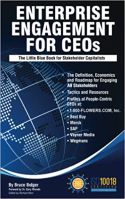
In this paper, one in a series for our Enterprise Engagement curriculum, we examine a critically important element of enterprise engagement – moving from strategy to execution. This paper is targeted at organizations that wish to move from talking about and planning enterprise engagement to implementing the initiatives at a tactical and measurable level – throughout the enterprise and for all key constituents. The main objective of this paper is to assist the reader through practical, clear and readily available techniques, practices and tools to implement enterprise engagement across the organization.
Published by:
Sorry, no results matched your search.