Whitepapers
Sorry, no results matched your search.
Promotional products can increase traffic to an exhibitor’s trade show booth. A 1991 study by Exhibit Surveys Inc., found that using promotional products can give you an advantage over other exhibitors for buyer attention.
Published by: Promotional Products Association International
This paper explores the different types of consumer, dealer, and aftermarket incentives used in the automotive industry. It also looks at how advertising agencies view incentives. It examines traditional incentive strategies and concludes with advice on program implementation.
Published by: Design Incentives
With the increase of postal rates over the past several years and dwindling advertising and promotional budgets, many companies are tempted to reduce or eliminate investments into pre-show mailings with promotional products in tradeshow settings. Is this a wise choice? The results of a 2004 study by Georgia Southern University indicates the answer is NO.
Published by: Promotional Products Association International
This study analyzed attempts by a dozen diverse companies to integrate their external and internal marketing practices.
Published by: The Forum for People Performance Management and Measurement
Manufacturers are sometimes cautious about the use of their brands in special markets. Obviously they want to maintain their brand integrity and avoid any impact consumer sales channels. This white paper from the Incentive Marketing Association (IMA), however, suggests that with basic safeguards in place, special markets like the incentive industry are “a win for the supplier, a win for the company, and a win for the employee.”
Published by: Incentive Marketing Association
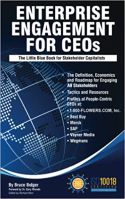
There’s a reason for the old adage: “You can’t manage what you don’t measure.” Anyone who has ever tried to run a business knows that’s true. But it is also true that you can’t manage what you measure only once each year.
When it comes to employee and customer engagement, most of us collect information through annual surveys, analyze the results, share them in a high-level report and perhaps devote part of an executive meeting to discuss the implications. Like performance reviews, this is usually done once a year – if at all.
Published by:
Federal legislators in 2002 enacted the Sarbanes-Oxley Act (SOX), which was designed to improve the accountability of corporate managers to shareholders and to improve public confidence in publicly traded companies. This white paper is an outline of the potential impact of SOX on the use of performance improvement and incentive programs.
Published by: Performance Improvement Council of the Incentive Marketing Association
This white paper discusses the range of "zero-based performance improvement strategies" that can be developed with the help of full-service incentive and performance improvement companies. It also includes contact information on members of the Incentive Marketing Association's Performance Improvement Council, made up of a dozen organizations dedicated to offering companies solutions-based incentive and performance improvement programs.
Published by: Performance Improvement Council of the Incentive Marketing Association
Marketers need not rely on their salespeople to elicit new leads for business. Existing customers are a gold mine for getting referrals—when they are asked! Through direct mail offers of promotional product incentives, marketers can leverage customer satisfaction and secure more valuable referrals. These findings are from a 2005 customer "referencing" study done by an advertising faculty at Louisiana State University and Glenrich Business Studies. *
Published by: Promotional Products Association International
An experiment conducted by Georgia Southern University shows that recipients of promotional products have a significantly more positive image of a company than consumers who do not receive promotional products.
Published by: Promotional Products Association International
Once again we see statistically how well promotional products can help market business, thanks to a 2004 study by L.J. Market Research.
Published by: Promotional Products Association International
Many traditional forms of advertising and promotion are losing ground
to newer media. This trend presents opportunities for the promotional
products medium. However, very little research exists documenting the
effectiveness of promotional products when compared to and combined
with other traditional forms of advertising such as television and print.
Published by: Promotional Products Association International
Gift cards have become an important corporate tool for reward and recognition. This paper looks at the growing use of gift cards and how to add to the "trophy value" of gift cards via communication, customization, and presentation.
Published by: Incentive Gift Card Council of the Incentive Marketing Association
The federal income tax considerations for incentive programs are often overlooked. While it is difficult to give technical tax advice that would apply equally to all incentive programs, following certain general income tax principles can make an incentive program more successful and avoid unpleasant surprises.
Published by: National Association for Employee Recognition
Section 274(j) of the Internal Revenue Code contains specific rules on the tax treatment of “employee achievement awards.” As a general rule, the employer cannot deduct employee achievement awards, unless they meet certain criteria.
Published by: National Association for Employee Recognition
While it is widely believed that employee attitudes and engagement directly influence customer experiences and customer spending behavior, there is little empirical evidence that has explicitly demonstrated this. This study, subtitled "An Empirical Analysis of the Relationship between Employee Attitudes, Customer Attitudes, and Customer Spending," combines results from an extensive survey of employees and customers at a hotel chain with the actual spending patterns of customers. Results show a direct, measurable relationship between the employee and customer perceptions of the hotel brand and customer spending behavior.
Published by: Forum for People Performance Management and Measurement
This paper introduces the discipline of "People Performance Management" as developed by the Forum for People Performance Management and Measurement, a unit of the Integrated Marketing Communications Department of the Medill School of Journalism at Northwestern University. People Performance Management refers to an integrated process designed to help firms maximize long-term financial performance through a strategic focus on their most valuable asset -- human capital.
Published by: Forum for People Performance Management and Measurement
Compelling research links financial results and customer satisfaction to engaged employees and channel partners.
Published by: Forum for People Performance Management and Measurement
The cost of employee disengagement to U.S. companies in terms of lost productivity, accidents, theft, and turnover is estimated to be as much as $350 billion per year. Disengaged workers are often absent (even when they are at work), disconnected, and often pessimistic about change and new ideas. They have high rates of absenteeism and tend to negatively influence those around them. Engaged workers, on the other hand, are significantly more productive, interact more positively with other employees and new hires, and are much more likely when they interact with customers to create relationships that generate loyalty and increased business. This white paper looks at the best measures available for building engagement among employees along with looking at the ROI for investing in those measures as a way for managers to demonstrate the economics of engagement to top executives.
Published by: Human Capital Institute
This study, conducted by Frank Mulhern on behalf of the Promotion Marketing Association with the support of the Forum, identified key challenges facing organizations attempting to fully integrate external and internal marketing.
Published by: The PMA/Northwestern University
This white paper highlights four key areas that impact organizational adoption of integrated marketing and motivate employees to think about and cooperate with integrated marketing efforts beyond their functional silos.
Published by: Forum for People Performance Management and Measurement
This paper looks at the types and applications of gift cards and gift certificates and reviews the research that points to the efficacy of gift certificates and cards in achieving business results. Gift certificates and cards have been shown to increase sales, improve employee performance and build loyalty, foster teamwork, and create new markets, among others.
Published by: Incentive Gift Card Council of the Incentive Marketing Association
Each year in the United States, organizations spend tens of billions of dollars on cash and non-cash rewards for consumer, distributor, sales and employee incentive programs –merchandise, gift cards, group and individual travel programs, time off, cash, etc. But few organizations invest the necessary time to understand which rewards should be used for which people to encourage what outcomes
Published by:
Historically, incentive programs, unlike other sales and marketing strategies, have endured economic downturns. In fact, according to a review of past Incentive Federation and industry studies, the incentive industry managed to grow following the recessions that occurred in the late 1980s, after September 11, 2001, and during the downturn of the late 1990s, following the dot-com collapse. In fact, there is no evidence that the industry suffered serious declines following the recession in the late 1970s/early 1980s, and the industry continued to prosper even during the Great Depression when the industry’s trade magazine at the time, Premium Practice, was filled with advertising pages.
Published by: Incentive Performance Center
Provides a detailed outline for marketers of every aspect of the FTC regulations protecting consumers against telemarketing fraud.
Published by: Direct Marketing Association
Sorry, no results matched your search.