Training
Sorry, no results matched your search.
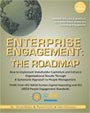
Improving Employee Engagement is not the product of one initiative. Organizations need a framework to achieve significant improvement in engagement. Sequencing and content of the initiative are critical, as is communication.
A carefully considered employee retention strategy can help boost engagement and reduce hiring, training, and other costs associated with turnover.
This term is likely to become as pervasive in the business lexicon as Return on Investment in the coming years.
Kicking off the new Enterprise Engagement Alliance Brand Engagement 360 Knowledge Management program with the Association of National Advertisers, this primer on Brand Engagement 360 is prepared for marketing and agency management ready to implement a strategic brand engagement process that includes its internal and other stakeholders--including employees, distribution and supply chain partners, communities, volunteers, donors etc. This article summarizes the two key phases of the process: 1) Strategic brand purpose definition and 2) Implementation. Neither require major investments in time and money and in fact are designed to save both over time while enhancing performance and stakeholder experiences through greater alignment and efficiency. These processes are based on over 40 years of academic research and processes time tested in the world of total quality management in factories around the world.
This term is likely to become as pervasive in the business lexicon as Return on Investment in the coming years
A carefully considered employee retention strategy can help boost engagement and reduce hiring, training, and other costs associated with turnover.
This term is likely to become as pervasive in the business lexicon as Return on Investment in the coming years.
Employees may tell you that cash is the greatest motivator. This paper looks at three areas of risk with cash or cash-like programs.
Linda Kaplan Thaler, one of the keynote speakers at this year’s Enterprise Engagement Expo, believes that – contrary to the conventional wisdom – ‘nice guys finish first’
Improve your recognition program effectiveness by understanding the recognition profiles of your target audience.
Focus your incentive travel spend on areas that are most motivating to program participants.
Results from the study Awards Selection: Insights from Managers, conducted by the Forum for People Performance Management and Measurement, sheds light on the efficacy of 12 distinct movitational tactics used by HR and marketing managers across many industries to achieve 10 specific organizational objectives.
Non-cash rewards are better than cash.
Gift cards have transformed the corporate market for rewards and recognition.
It’s human nature that non-cash rewards will work better than cash.
Describes why modern fulfillment processes are important to an incentive program.
In this white paper, the authors show how people performance management takes familiar disciplines such as training and integrates them across functional lines to maximize results.
An approach to employee engagement that reinforces behaviors linked to patient satisfaction.
Kicking off the new Enterprise Engagement Alliance Brand Engagement 360 Knowledge Management program with the Association of National Advertisers, this primer on Brand Engagement 360 is prepared for marketing and agency management ready to implement a strategic brand engagement process that includes its internal and other stakeholders--including employees, distribution and supply chain partners, communities, volunteers, donors etc. This article summarizes the two key phases of the process: 1) Strategic brand purpose definition and 2) Implementation. Neither require major investments in time and money and in fact are designed to save both over time while enhancing performance and stakeholder experiences through greater alignment and efficiency. These processes are based on over 40 years of academic research and processes time tested in the world of total quality management in factories around the world.
Veteran sales training executive Richard (Rick) Beers turns a lot of traditional thinking about sales training on its head through a strategic, systematic, and measurable approach. His program is designed to increase learning retention by creating a positive training environment, leveraging the strengths of newly hired sales professionals, and delivering a strong training curriculum.
Kicking off the new Enterprise Engagement Alliance Brand Engagement 360 Knowledge Management program with the Association of National Advertisers, this primer on Brand Engagement 360 is prepared for marketing and agency management ready to implement a strategic brand engagement process that includes its internal and other stakeholders--including employees, distribution and supply chain partners, communities, volunteers, donors etc. This article summarizes the two key phases of the process: 1) Strategic brand purpose definition and 2) Implementation. Neither require major investments in time and money and in fact are designed to save both over time while enhancing performance and stakeholder experiences through greater alignment and efficiency. These processes are based on over 40 years of academic research and processes time tested in the world of total quality management in factories around the world.
Sorry, no results matched your search.