

Business Schools Need Accountability—and a Stakeholder Purpose
The Irony Behind Marquis’ Opposition
Click here to subscribe to the ESM weekly e-newsletter.
 Should business schools be abolished, or held accountable for the kind of leadership they produce? Christopher Marquis’s provocative New York Times essay has prompted a debate with particular relevance to enterprise engagement: whose interests should management education teach future leaders to serve?
Christopher Marquis, Sinyi Professor of Chinese Management at the University of Cambridge’s Judge Business School, challenged the institution in his October 18 essay, “I Teach at a Business School. It’s Time to Shut Them Down.” Two responses, published by
Darden Report and Knowledge at Wharton, argue that business schools can become essential instruments of the change he seeks.
The debate also contains a constructive irony: Marquis’s own work advocates principles closely aligned with stakeholder capitalism, whether or not he chooses that label. His critics may be closer to allies than the abolition debate suggests.
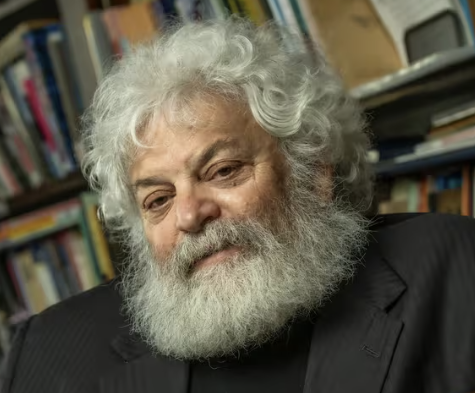 In its Oct. 23 article, “Don’t Burn Down Business Schools. Make Them Worthy of Their Purpose,” Darden Report, a publication of the University of Virginia Darden School of Business, presents the argument of three Darden authors: R. Edward Freeman, Stephen E. Bachand University Professor of Business Administration and a leading stakeholder theorist; Michael Lenox, University Professor and Tayloe Murphy Professor of Business Administration; and Joey Burton, Executive Director of the Institute for Business in Society.
Their central argument is that business succeeds through relationships among customers, employees, suppliers, investors, and communities. Understanding those relationships belongs at the center of management education.
They also defend the case method as a means of developing judgment amid incomplete information and competing interests. The problem is what cases teach and how instructors use them. Eliminating schools would leave the pressures encouraging narrowly financial definitions of success intact, while removing institutions capable of challenging them.
A complementary response comes from Witold Henisz, Deloitte & Touche Professor of Management and Vice Dean of the Impact, Value, and Sustainable Business Initiative at the University of Pennsylvania’s Wharton School. His Oct. 27, 2026, Knowledge at Wharton article, “Don’t Abolish Business Schools. Make Them Accountable for Impact as well as Value,” originally appeared on LinkedIn, Henisz accepts important parts of Marquis’s diagnosis, including distorted incentives and exaggerated claims that doing good invariably improves financial performance. His proposed response combines curriculum reform, transparency about corporate influence on cases and research, and evaluation of effects on financial, human, social, and natural capital. He acknowledges genuine tradeoffs and the need for public policy where voluntary action cannot resolve harms.
Henisz also argues that the Business Roundtable’s 2019 stakeholder capitalism pledge illustrates the limits of voluntary pledges. The declaration alone did little to change corporate behavior because executive pay, boards, and investor expectations remained unchanged—underscoring the need to translate stakeholder commitments into incentives and accountability.
Stakeholder accountability, in this formulation, requires evidence and consequences.
The Irony Behind Marquis’ Opposition
The irony surrounding Marquis deserves respectful attention. While in his New York Times article Marquis brushes off the concept of stakeholder capitalism, his book Better Business: How the B Corp Movement Is Remaking Capitalism, businesses committed to workers, communities, environmental stewardship, and social benefit alongside shareholder interests. His Cambridge biography describes research seeking a better balance among corporations, governments, and civil society to deliver broadly beneficial outcomes.
Those commitments align substantially with the principles of stakeholder capitalism, no matter what terms he prefers to use. This suggests that the disagreement concerns how to make institutions deliver on shared aspirations.
Marquis has also clarified his prescription. In an Oct. 19 interview by Marc Ethier in Poets&Quants, he emphasized reinvention through changes to curricula and faculty incentives, acknowledged committed people within business schools, and explained that a New York Times editor selected the headline.
For enterprise engagement practitioners, this discussion invites a practical test. Can graduates explain how a management decision affects the people whose contributions sustain the enterprise? Can they distinguish an immediate financial gain from an improvement that lasts? Can they recognize when a decision shifts costs onto others?
Consider a hypothetical company that reduces customer-support staffing. A financial model might record payroll savings immediately. A fuller management assessment would also investigate employee workload, customer retention, service failures, and the time needed to rebuild lost expertise. The relevant question becomes whether the decision improves the enterprise’s overall performance over time and if the actual impact is measured.
Business schools could demonstrate their purpose by teaching students to investigate such relationships, test assumptions, and accept responsibility for results. Marquis’s challenge and his critics’ responses create an opportunity to advance that work together. The most useful outcome would be graduates equipped to make stakeholder principles observable in everyday management and financial disclosures.
Enterprise Engagement Alliance Services
 Celebrating our 18th year, the Enterprise Engagement Alliance helps organizations enhance performance through:
1. Information and marketing opportunities on stakeholder management and total rewards:
- ESM Weekly on stakeholder management since 2009. Click here to subscribe; click here for media kit.
- RRN Weekly on total rewards since 1996. Click here to subscribe; click here for media kit.
- EEA YouTube channel on enterprise engagement, human capital, and total rewards since 2020
 Management Academy to enhance future equity value for your organization.
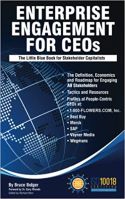
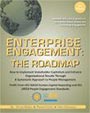
3. Books on implementation: Enterprise Engagement for CEOs and Enterprise Engagement: The Roadmap.
4. Advisory services and research: Strategic guidance, learning and certification on stakeholder management, measurement, metrics, and corporate sustainability reporting.
5. Permission-based targeted business development to identify and build relationships with the people most likely to buy.
Contact: Bruce Bolger at TheICEE.org; 914-591-7600, ext. 230.