

ASML Links Executive Pay to Employee Feedback. Accountability Must Start at the Top
Holding Senior Management Accountable As Well
Understanding the Causes of Declining Engagement
Click here to subscribe to the ESM weekly e-newsletter.
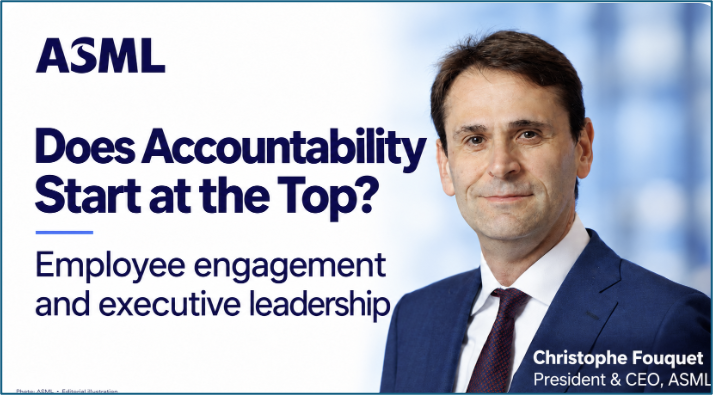 ASML’s decision to link executive remuneration to employee assessments of their workplace offers a promising example of treating engagement as a business issue. It also raises a question that every organization adopting such measures should address: What happens when the CEO’s own decisions contribute to lower scores?
According to reporting by Mint, citing an internal memo reported by Business Insider, ASML’s employee engagement index fell from 78% to 73.5%. More than 38,000 employees responded. The company selected six survey questions for a Workplace Experience Index that will influence executive remuneration in coming years. The questions address such issues as trust, speaking up, expectations, and the experience of working with managers and teams.
The incentive compensation plan for employee engagement reportedly will apply to Fouquet and senior management as well.
Holding Senior Management Accountable As Well
The approach deserves attention because employees’ experiences should matter in evaluating leadership performance. The incentive formula cannot, by itself, identify who created the conditions behind the answers. A manager may receive poor feedback because of decisions about staffing, reporting relationships, workloads, or job security made several levels above that manager. Holding people accountable for engagement requires examining the authority they actually have to improve it.
ASML’s reorganization makes that distinction especially relevant. In January 2026, CEO Christophe Fouquet, writing on behalf of the Board of Management, announced proposed changes to the technology and IT organizations that could result in a net reduction of approximately 1,700 positions. The company said employees wanted simpler processes and more time for engineering. It presented the changes as a response to bureaucracy and acknowledged that the announcement would create uncertainty.
There is a legitimate business argument for simplifying an organization that has become difficult to navigate. There is also a leadership obligation to examine how the chosen solution affects the people expected to make it work. By March, Tom’s Hardware reported that employees still lacked clarity about their jobs seven weeks after the announcement. An ASML spokesperson acknowledged that the uncertainty was causing unrest. That is evidence of a workplace problem connected to a company-level change, rather than something a frontline manager could resolve independently.
Employee representatives also questioned the process. In a March statement, Dutch union CNV criticized remarks it attributed to Fouquet indicating that the intention to proceed with the transformation would remain regardless of whether employee representatives’ advice was positive or negative. This is the union’s account and assessment, but it identifies a central issue for any listening initiative: whether employees believe their input can influence decisions.
These reports do not establish that Fouquet personally caused the engagement decline. They do establish a reason to examine the reorganization, its implementation, and senior leadership’s communication when interpreting the results. Broader research reinforces that need. Gallup found that among employees experiencing significant disruption, those who strongly trusted their organization’s leadership were 4.5 times as likely to be engaged and 62% less likely to experience burnout. Those associations underscore why an assessment of engagement should include confidence in senior leadership and its handling of change.
Understanding the Causes of Declining Engagement
For organizations considering similar incentives, the practical implications are straightforward. Surveys should distinguish employees’ experiences with their immediate managers from their assessments of corporate leadership. Follow-up should identify which decisions created the problems, who can change them, and what action will follow. Employees also need confidence that candid answers will not expose them—or their managers—to pressure to produce better scores.
ASML’s reported approach reportedly includes the CEO, which is a meaningful feature. The potential flaw lies in treating lower engagement primarily as something leaders below the CEO must fix while leaving the CEO’s strategy and conduct insufficiently examined. The financial significance also remains unclear. As TechTimes notes, the announcement does not specify the new index’s weighting or payout thresholds. It therefore does not demonstrate that any particular decline will produce a particular reduction in compensation.
From an enterprise engagement perspective, the objective should be to improve the conditions that enable people to contribute. Linking compensation to employee feedback can support that objective when it leads to honest diagnosis and corrective action. Sometimes that action requires better management within a team. Sometimes it requires the CEO to change a decision, a process, or a leadership practice. A credible accountability system must make room for both.
Enterprise Engagement Alliance Services
 Celebrating our 18th year, the Enterprise Engagement Alliance helps organizations enhance performance through:
1. Information and marketing opportunities on stakeholder management and total rewards:
- ESM Weekly on stakeholder management since 2009. Click here to subscribe; click here for media kit.
- RRN Weekly on total rewards since 1996. Click here to subscribe; click here for media kit.
- EEA YouTube channel on enterprise engagement, human capital, and total rewards since 2020
 Management Academy to enhance future equity value for your organization.
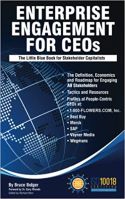
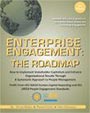
3. Books on implementation: Enterprise Engagement for CEOs and Enterprise Engagement: The Roadmap.
4. Advisory services and research: Strategic guidance, learning and certification on stakeholder management, measurement, metrics, and corporate sustainability reporting.
5. Permission-based targeted business development to identify and build relationships with the people most likely to buy.
Contact: Bruce Bolger at TheICEE.org; 914-591-7600, ext. 230.