

US Companies Keep Publishing Sustainability Reports, but Disclose Less About Their Workforces
Reporting Continues, With Less Fanfare
The People Data Tell a More Complicated Story
Global expectations continue to shape US reports
Click here to subscribe to the ESM weekly e-newsletter.
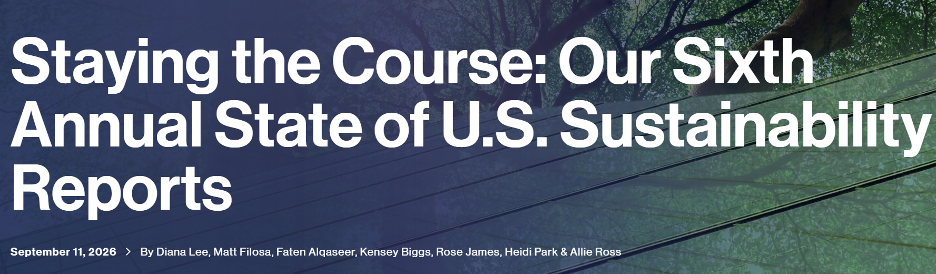 Most large US companies have continued to publish sustainability reports despite political scrutiny and changing disclosure rules. They are also providing more data and seeking more outside assurance of it. Yet one of the most striking findings in a new analysis concerns people: Companies continue to discuss inclusion, while substantially fewer disclose the workforce figures that would help readers evaluate their claims.
The findings come from Teneo’s sixth annual analysis of US sustainability reports, published Sept. 11, 2026. Diana Lee, Matt Filosa, Faten Alqaseer, Kensey Biggs, Rose James, Heidi Park and Allie Ross are the authors. A version posted Sept. 27 by Lee and Filosa on the Harvard Law School Forum on Corporate Governance identifies a Teneo memorandum by Lee, Filosa, James, Park and Ross as its basis.)
Reporting Continues, With Less Fanfare
Teneo found that 87% of companies that had published a sustainability report by the same point last year had published one again in 2026. The average report remained 69 pages long. Companies were less inclined to announce their reports: 32% issued a press release, compared with a peak of 62% in 2022. The language has shifted as well. “ESG” appeared in just 4% of report titles, down from 35% in 2022, while “sustainability” remained the dominant term and “impact” and “purpose” gained ground.
Those changes suggest that many companies still consider the information worth gathering and publishing, even as they become more careful about how they present it. The report documents a corresponding emphasis on evidence: 63% of companies included a standalone sustainability data table, up from 57% in 2025, and 75% obtained external assurance for some data in their reports, up from 54% in 2022. Assurance for some data does not mean the entire report was independently verified, but the trend shows growing attention to the credibility of reported measures.
The People Data Tell a More Complicated Story
The clearest tension for organizations concerned with stakeholder relationships is in workforce disclosure. Nearly three-quarters of the companies, 72%, included a section focused on inclusion. Yet the share publishing workforce demographic data fell from 92% to 64%. Disclosure of standardized EEO-1 data dropped more sharply, from 78% to 21%. Teneo also notes that human capital and employee health and safety measures are among the metrics commonly included in sustainability data tables.
A company can describe its commitments to employees without publishing every underlying measure. Still, the widening gap between inclusion narratives and demographic disclosure makes it harder for outside readers to assess progress consistently. For employees, investors and customers seeking to understand how a company treats people, the useful question is which claims are supported by comparable results over time. The analysis measures what companies disclosed; it does not establish whether their actual workforce practices improved or worsened.
Global expectations continue to shape US reports
The study also found that 51% of companies had completed or were completing a double materiality assessment, up from 41% in 2025. Such an assessment considers both how sustainability issues affect a company and how the company affects people and the environment. Fourteen percent aligned disclosures with International Sustainability Standards Board standards, nearly twice the prior year’s share, while 20% said they were monitoring potential compliance requirements under the European Union’s Corporate Sustainability Reporting Directive.
Teneo’s picture is therefore one of continuity under pressure, with an unresolved question at its center. Companies are maintaining reports, adding data and seeking assurance, but greater rigor will matter most if it extends to the effects of business decisions on people as well as the environment. For readers of these reports, the test is how many companies provide enough consistent evidence to judge how they create value for employees and other stakeholders. The answer is: very few.
Enterprise Engagement Alliance Services
 Celebrating our 18th year, the Enterprise Engagement Alliance helps organizations enhance performance through:
1. Information and marketing opportunities on stakeholder management and total rewards:
- ESM Weekly on stakeholder management since 2009. Click here to subscribe; click here for media kit.
- RRN Weekly on total rewards since 1996. Click here to subscribe; click here for media kit.
- EEA YouTube channel on enterprise engagement, human capital, and total rewards since 2020
 Management Academy to enhance future equity value for your organization.
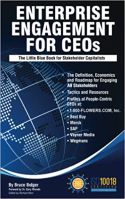
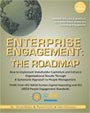
3. Books on implementation: Enterprise Engagement for CEOs and Enterprise Engagement: The Roadmap.
4. Advisory services and research: Strategic guidance, learning and certification on stakeholder management, measurement, metrics, and corporate sustainability reporting.
5. Permission-based targeted business development to identify and build relationships with the people most likely to buy.
Contact: Bruce Bolger at TheICEE.org; 914-591-7600, ext. 230.