

What If Companies Focused on Helping Instead of Selling?
When Helping Becomes the Business Model
Helping Makes Work More Meaningful
Moving From Selling to Helping
Measuring Whether Helping Actually Works
Click here to subscribe to the ESM weekly e-newsletter.
There may be few words more powerful than help. People need help every day, and most people appear more willing to provide it than we assume. In a
 series of studies published in the Journal of Personality and Social Psychology, researchers Francis Flynn and Vanessa Lake found that people seeking assistance underestimated by as much as 50% the likelihood that another person would agree to a direct request for help. Other research has found that helping others can increase the helper’s sense of well-being and, more importantly for business, the meaningfulness people derive from their work.
Yet remarkably few customers wake up hoping someone will sell them something. The academic sales literature has long distinguished between a selling orientation, historically associated with pressure to close a transaction, and a customer orientation based on understanding needs and matching solutions to them. A meta-analysis of selling orientation versus customer orientation involving 126,790 salesperson responses examined that distinction, while another meta-analysis concluded that sales performance benefits when salespeople identify individual customer needs and offer products suited to those needs.
There is also evidence explaining why customers resist overt persuasion. Research published in the Journal of the Academy of Marketing Science on consumer perceptions of sales pressure found that high-pressure tactics can increase sales in the short term while harming longer-term relationships with customers, salespeople and companies. A 2026 meta-analysis of psychological reactance research similarly found that people resist persuasive messages when they perceive their freedom of choice to be threatened.
Ironically, the power of helping may be demonstrated by people who abuse it. The Federal Trade Commission’s guidance on tech-support scams warns that scammers frequently invent a computer problem and then pose as the helpful expert who can fix it. The deception works precisely because assistance creates a different psychological relationship than an obvious sales pitch.
When Helping Becomes the Business Model
Some successful companies already come close to operating this way. The Ritz-Carlton Gold Standards instruct employees to respond to both expressed and unexpressed guest needs, create memorable experiences and personally own and immediately resolve guest problems. The company does not simply tell employees to be pleasant; its operating system gives them responsibility for helping the guest. A National Institute of Standards and Technology case study of Ritz-Carlton has documented the company’s long-standing practice of empowering employees to spend up to $2,000 to resolve a customer problem when necessary.
Trek Bikes makes the philosophy unusually explicit. Trek’s mission and customer philosophy is to build products it loves, provide “incredible hospitality” and improve the world by getting more people on bikes. Its rider-support site tells riders that somebody will be there when they need assistance, while Trek stores describe their approach even more simply: “we’re here to help, not to hassle.”
There is evidence that such an orientation can produce economic value. Research testing the service-value profit chain developed by Harvard Business School professors James L. Haskett, Leonard Schlesinger Jr. and others has linked service orientation to employee satisfaction, customer satisfaction and loyalty, and ultimately financial results. One 2020 Journal of Business Research study of service orientation and profitability found that customer relationship performance fully mediated the relationship between service orientation and retailer profitability.
Helping Makes Work More Meaningful
The implications extend well beyond customer service. Research on helping others and meaningful work found in three experimental studies that
 people who perceived their work as benefiting someone else experienced greater meaningfulness than those focused on benefiting themselves. Longitudinal research has likewise identified beneficence—the sense that one’s work positively affects others—as an important predictor of meaningful work.
This applies even to salespeople. Research by Wharton professor Adam Grant on beneficiary contact and performance found that contact with the beneficiaries of employees’ work strengthened the effects of transformational leadership and increased sales and revenue among call-center employees. Making clear whom the employee is helping can turn an abstract corporate objective into a human outcome.
That principle can extend throughout the enterprise. Research on collaborative buyer-supplier relationships finds that information sharing, joint effort and investment build trust and commitment, which in turn contribute to satisfaction and performance. A meta-analysis of 50 studies involving 11,759 participants likewise found trust to be central to creating more valuable supply-chain relationships.
Communities matter as well. A meta-analysis of corporate social responsibility and employee outcomes covering 143 studies and almost 90,000 participants found meaningful relationships between employees’ perceptions of corporate social responsibility and outcomes including organizational identification, engagement, commitment and job satisfaction. Helping a community, when connected to real needs rather than publicity, can give employees and other stakeholders another reason to care about the organization.
Moving From Selling to Helping
This transformation has to begin with the CEO and senior management because it changes the definition of corporate purpose. Instead of merely declaring what the organization sells or wishing to “be the leader” in a category, the purpose should identify whom the company exists to help, what it helps them accomplish and how doing so creates sustainable value for investors and other stakeholders.
That purpose then has to cascade through the organization. Marketing asks whether communications genuinely help people understand a problem and make a better decision rather than simply creating urgency. Salespeople become diagnosticians whose job is to determine whether the company can indeed help; sometimes the correct recommendation should be a less expensive product, postponing a purchase or not buying at all. Human resources connects every job to the people who ultimately benefit from it and hires, trains, rewards and recognizes accordingly. Procurement asks not simply how cheaply it can buy, but how it can help suppliers improve quality, innovation and productivity. Distribution management focuses on helping partners succeed economically while serving end customers. Community engagement starts by asking communities what assistance would actually create value related to the organization’s purpose and values rather than deciding internally what will generate the best publicity.
The hardest test comes when helping conflicts with an immediate sale. A company that claims to help customers while rewarding salespeople exclusively for closing business has not changed its purpose; it has only changed its vocabulary.
Measuring Whether Helping Actually Works
- Helping should therefore be treated like any other business strategy and measured from activities through outcomes.
- For customers, companies can track resolution rates, customer effort, complaints, returns, retention, referrals, repeat purchases and lifetime value.
- Sales management can measure not simply revenue but repeat business, churn, solution fit and even how often representatives appropriately walk away from opportunities that are not right for the customer.
- Employee measures can include perceived meaningfulness, understanding of whom one’s work helps, engagement, retention, productivity and customer outcomes. Supplier and distribution-partner measures can include trust, satisfaction, retention, joint innovation, issue-resolution time and partner financial health.
- Community initiatives should establish specific social or economic outcomes with the people they are intended to help rather than measuring only dollars donated or volunteer hours.
Companies obviously still need to sell. The question is what comes first. If the operating principle is How can we help?, the sale becomes the economic result of creating value rather than the purpose of the interaction. That may prove not only more appealing to customers and business partners, but a far more meaningful reason for people to come to work every day.
The obvious objection is that good selling already is helping. And it should be. The difference is not between commerce and altruism, or even between selling and service. It is about which objective comes first. When the primary objective is closing the transaction, helping can become a technique for making the sale. When the primary objective is creating value for the customer, the sale becomes evidence that the company succeeded in helping someone enough that they were willing to pay for it. That is arguably the best way to increase loyalty and referrals over the long term.
Enterprise Engagement Alliance Services
 Celebrating our 18th year, the Enterprise Engagement Alliance helps organizations enhance performance through:
1. Information and marketing opportunities on stakeholder management and total rewards:
- ESM Weekly on stakeholder management since 2009. Click here to subscribe; click here for media kit.
- RRN Weekly on total rewards since 1996. Click here to subscribe; click here for media kit.
- EEA YouTube channel on enterprise engagement, human capital, and total rewards since 2020
 Management Academy to enhance future equity value for your organization.
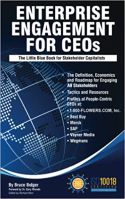
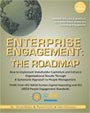
3. Books on implementation: Enterprise Engagement for CEOs and Enterprise Engagement: The Roadmap.
4. Advisory services and research: Strategic guidance, learning and certification on stakeholder management, measurement, metrics, and corporate sustainability reporting.
5. Permission-based targeted business development to identify and build relationships with the people most likely to buy.
Contact: Bruce Bolger at TheICEE.org; 914-591-7600, ext. 230.