

The Problem Isnt Quarterly Earnings Its Quarterly Management
.jpeg) Quarterly earnings reports can strengthen accountability when companies explain them within a clearly defined purpose, long-term strategy, measurable objectives, and values supported by their shareholders and other stakeholders.
Quarterly earnings reports can strengthen accountability when companies explain them within a clearly defined purpose, long-term strategy, measurable objectives, and values supported by their shareholders and other stakeholders.By Bruce Bolger
Quarterly Results Should Be a Checkpoint, Not the Destination
Give Shareholders the Strategy Before Giving Them the Results
Purpose Is Not an Excuse for Poor Performance
Report the Quarter Without Managing for It
Click here to subscribe to the ESM weekly e-newsletter.
Over the past year, talk has increased about lifting the requirement for public companies to report their financial results on a quarterly basis. The current debate was revived by President Trump’s September 2025 call to let public companies report financial results twice a year, prompting the SEC in May 2026 to propose making semiannual reporting optional instead of requiring three quarterly Form 10-Q filings. The proposal remains under review and faces strong investor opposition over reduced transparency, while business groups argue that it could lower costs and discourage short-term management.
There is nothing inherently wrong with requiring public companies to report their financial performance every three months. Shareholders have a legitimate right to know how their companies are performing, whether management is using capital effectively, and whether results are improving or deteriorating. The problem arises when quarterly earnings cease to be a report on the business and become the purpose of the business.
A company with no meaningful purpose beyond maximizing shareholder returns can easily allow the next earnings target to drive decisions. Hiring can be postponed, maintenance deferred, customer service reduced, promising investments canceled, and experienced employees eliminated—not necessarily because these actions will strengthen the enterprise, but because they can improve the current financial presentation. The answer is not less transparency. It is more context.
Quarterly Results Should Be a Checkpoint, Not the Destination
Stakeholder management begins with a clearly articulated purpose, translated into financial and nonfinancial goals, specific objectives, and values that guide difficult decisions and tradeoffs. It then identifies the customers, employees, distribution and supply chain partners, communities, and investors whose engagement is necessary to achieve those aims. Within that framework, quarterly earnings become one important measure of progress rather than the organization’s overriding objective.
Management should still explain whether revenue, earnings, margins, and cash flow met expectations. More importantly, it should also explain those results in the context of the company’s longer-term plan. Did earnings decline because customer demand weakened, costs increased unexpectedly, or management failed to execute? Or did the company deliberately invest in employee capabilities, product development, cybersecurity, maintenance, quality, customer service, or productive capacity expected to create future value? Those are very different explanations for the same quarterly earnings decline.
For any organization with a business operating system, creating a quarterly reporting is already built into standing operating procedures to help management and team leaders evaluate progress and identify opportunities and challenges.
Give Shareholders the Strategy Before Giving Them the Results
A purpose-led company should clearly disclose its purpose, goals, objectives, values, operating measures, and approach to inevitable stakeholder tradeoffs. It can then attract shareholders who understand the strategy and evaluate management against the commitments it has actually made. The EEA framework specifically calls for organizations to explain to shareholders both their financial and nonfinancial goals, the measures used to track progress, and the basis on which management makes tradeoffs.
A company pursuing a five-year expansion strategy should not surprise investors when it incurs the expenses required to execute it. A business committed to product quality should explain why the need for additional testing temporarily affected margins. An organization investing in retention should demonstrate how workforce expenditures relate to turnover, productivity, service, or customer loyalty.
Management cannot prevent every shareholder from demanding immediate results. It can, however, communicate clearly enough to attract investors who understand what the company is trying to accomplish and why.
Purpose Is Not an Excuse for Poor Performance
Purpose and stakeholder capitalism should never become shields behind which management hides weak execution. A company cannot simply claim that disappointing earnings resulted from investments in employees, customers, communities, or sustainability. It should identify the expected business benefits, establish relevant measures, report progress, and change course when the evidence shows that an initiative is not working.
The EEA describes stakeholder engagement as the application of Total Quality Management principles to people and organizational performance: establish clear objectives, measure results, gather feedback, identify variation, and continuously improve. Quarterly reporting fits naturally into that process. It creates a regular opportunity to compare actual results with plans, identify emerging problems, explain deviations, and evaluate whether investments are producing the intended outcomes.
In fact, companies committed to stakeholder management should welcome quarterly reporting—and go beyond it. Financial statements show what has already happened. Customer retention, employee turnover, productivity, quality, safety, innovation, and partner stability can help explain why it happened and what may happen next.
Report the Quarter Without Managing for It
Quarterly earnings are valuable because they impose discipline and transparency. They become destructive only when management sacrifices the business to manufacture the desired number.
A well-managed company should be able to say: Here is our purpose. Here are our long-term financial goals. Here are the objectives we must achieve and the values that govern how we will achieve them. Here are the stakeholders whose engagement is essential. Here are the investments and tradeoffs we made this quarter. Here is what worked, what did not, and what we will do next.
When management provides that context, a quarterly earnings miss does not automatically indicate failure—and an earnings beat does not automatically indicate success. The real question is whether the quarter moved the organization closer to or farther from creating sustainable value.
Quarterly reporting is not the enemy of long-term management. Properly used, it is an important accountability tool.
Enterprise Engagement Alliance Services
 Celebrating our 17th year, the Enterprise Engagement Alliance helps organizations enhance performance through:
1. Information and marketing opportunities on stakeholder management and total rewards:
- ESM Weekly on stakeholder management since 2009. Click here to subscribe; click here for media kit.
- RRN Weekly on total rewards since 1996. Click here to subscribe; click here for media kit.
- EEA YouTube channel on enterprise engagement, human capital, and total rewards since 2020
 Management Academy to enhance future equity value for your organization.
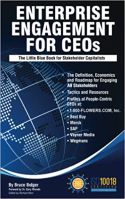
3. Books on implementation: Enterprise Engagement for CEOs and Enterprise Engagement: The Roadmap.
4. Advisory services and research: Strategic guidance, learning and certification on stakeholder management, measurement, metrics, and corporate sustainability reporting.
5. Permission-based targeted business development to identify and build relationships with the people most likely to buy.
Contact: Bruce Bolger at TheICEE.org; 914-591-7600, ext. 230.