

Part 2: Study of 49 Companies Finds Strong Relationship Between Productivity, Stakeholder Engagement, and Long-Term Results
The Strongest Pattern: Productivity and Margins Matter
Within Industries, Stronger Operating Performance Often Predicts Better Stocks
Employee and Customer Satisfaction Often Reinforce Financial Success
The Most Interesting Finding: High Margins Can Hide Problems
A Different Way to View Corporate Performance
Click here to subscribe to the ESM weekly e-newsletter.
A growing analysis of 49 public companies across 17 industries is beginning to reveal important patterns about how organizations create value through employees and customers. The findings suggest that companies producing the strongest long-term results often share a common combination of traits: high productivity per employee, strong operating margins, healthy revenue growth, positive employee sentiment, and favorable customer satisfaction scores. The EEI uses only publicly available financial information to score companies on how effectively they create value from customers and employee. Click here for FAQs on the EEI.
At the same time, the study also reveals important exceptions. Some companies generate extraordinary profits and stock performance despite only average employee satisfaction, suggesting that patents, pricing power, scale, network effects, or market structure can sometimes mask underlying workforce or cultural strain.
A fair question to ask of the Enterprise Engagement Alliance’s EEI is that the relationship could appear circular because the EEI includes productivity and profitability-related measures from standard financial reporting, but the fact that high EEI scores did not consistently predict superior stock performance, net income, employee ratings, customer satisfaction—and that several companies with high margins still showed weaker stakeholder indicators—suggests the index is measuring more than simple financial success and may instead capture differences in organizational effectiveness within industries.
The Strongest Pattern: Productivity and Margins Matter
The clearest finding so far is that companies with the strongest operating productivity metrics tend to outperform peers financially, even though net income is not included in the score. This is especially evident in industries such as semiconductor manufacturing equipment, payments, biotech, pharmaceuticals, and high tech, where intellectual property, software platforms, patents, or network economics allow relatively small workforces to generate enormous revenue and profit per employee.
In semiconductor manufacturing equipment, for example, ASML significantly outperforms Applied Materials in revenue per employee, profit per employee, operating margin, and stock performance. Similar patterns appear in payments, where Visa and Mastercard generate some of the highest productivity and profitability metrics in the entire study while also producing strong shareholder returns.
The same dynamic appears in biotech. Argenx and Vertex Pharmaceuticals generate exceptionally high productivity and growth metrics alongside major stock gains.
Within Industries, Stronger Operating Performance Often Predicts Better Stocks
One important finding is that comparisons appear most meaningful within industries rather than across industries. Different sectors naturally operate with radically different labor models and margin structures. Airlines, retailers, and restaurants are inherently more labor-intensive than hardware technology, software, payments, or biotech companies.
Within industries, the patterns become clearer. In cruise lines, Royal Caribbean Group shows the strongest productivity and profitability profile and dramatically outperforms both Carnival Corporation and Norwegian Cruise Line Holdings in stock performance. In banking, JPMorgan Chase leads peers in productivity, profitability, and revenue growth and also produces the strongest stock performance among the major banks analyzed.
In airlines, Delta Air Lines and United Airlines significantly outperform American Airlines in profitability, productivity, and shareholder returns. The same pattern appears in advertising agencies, where Publicis Groupe shows stronger financial productivity and dramatically better stock performance than both Omnicom and WPP.
Employee and Customer Satisfaction Often Reinforce Financial Success
Where employee and customer satisfaction data are available, another pattern emerges: companies combining strong productivity with stronger employee and customer scores often produce more durable overall performance.
The big-box retail comparison may be one of the clearest examples. Costco shows the strongest productivity profile, the strongest stock performance, the highest Glassdoor employee rating, and the highest customer satisfaction score among the major retailers studied. Target and Walmart lag behind on both stakeholder and financial indicators. High tech produces similar results. Microsoft and Alphabet combine very high productivity metrics with strong employee ratings and customer satisfaction indicators. Both also significantly outperform many peers financially.
In fast food, Dutch Bros. stands out for combining strong employee sentiment and extraordinary growth with major stock outperformance. McDonald's shows exceptional profitability and shareholder performance despite more modest employee ratings, while Starbucks demonstrates relatively strong customer satisfaction but weaker shareholder performance during the measured period.
The Most Interesting Finding: High Margins Can Hide Problems
One of the most important early findings is that high profitability can sometimes conceal employee dissatisfaction or operational stress. This appears especially relevant in biotech, pharmaceuticals, payments, high tech, and oil and gas, where patents, regulation, scale, pricing power, or platforms can generate unusually high profits regardless of employee sentiment.
The biotech comparison highlights the issue clearly. Argenx generates one of the strongest financial and stock-performance profiles in the entire analysis, yet its employee satisfaction scores trail Vertex Pharmaceuticals. The implication is not that profitability and employee satisfaction are unrelated. Rather, it suggests that some companies can temporarily overcome workforce strain through structural financial advantages. Over time, however, the strongest and potentially most durable organizations may be those that align productivity, customer value, employee sentiment, and growth into a reinforcing system.
A Different Way to View Corporate Performance
Perhaps the most important takeaway from the study so far is that traditional financial analysis alone may not fully explain why some companies consistently outperform peers over long periods.The strongest-performing organizations in the analysis generally combine several traits simultaneously:
- A business model with high margins and revenues per customer and employee
- Strong workforce productivity
- High profitability per employee and revenue generation efforts
- Consistent revenue growth
- Positive employee sentiment
- Favorable customer satisfaction
- Consistent shareholder performance
Enterprise Engagement Alliance Services
 Celebrating our 17th year, the Enterprise Engagement Alliance helps organizations enhance performance through:
1. Information and marketing opportunities on stakeholder management and total rewards:
- ESM Weekly on stakeholder management since 2009. Click here to subscribe; click here for media kit.
- RRN Weekly on total rewards since 1996. Click here to subscribe; click here for media kit.
- EEA YouTube channel on enterprise engagement, human capital, and total rewards since 2020
 Management Academy to enhance future equity value for your organization.
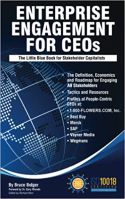
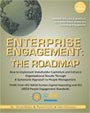
3. Books on implementation: Enterprise Engagement for CEOs and Enterprise Engagement: The Roadmap.
4. Advisory services and research: Strategic guidance, learning and certification on stakeholder management, measurement, metrics, and corporate sustainability reporting.
5. Permission-based targeted business development to identify and build relationships with the people most likely to buy.
Contact: Bruce Bolger at TheICEE.org; 914-591-7600, ext. 230.