

EU Moves to Simplify ESRS Disclosures While Keeping Double Materiality at the Center
.png) The European Commission’s latest draft revisions would sharply reduce human capital and environmental reporting burdens, narrow the companies affected by CSRD, and create a voluntary standard that limits what large companies can demand from smaller suppliers.
The European Commission’s latest draft revisions would sharply reduce human capital and environmental reporting burdens, narrow the companies affected by CSRD, and create a voluntary standard that limits what large companies can demand from smaller suppliers.What Is Changing
Who Would Be Affected
The New “Supply Chain Cap”
Click here to subscribe to the ESM weekly e-newsletter.
The European Union has entered a new phase in sustainability reporting: not abandoning ESRS but simplifying it. On May 6, 2026, the European Commission opened public feedback on draft revised European Sustainability Reporting Standards (ESRS) and a voluntary sustainability reporting standard, both of which are not yet adopted or in force until published in the Official Journal. The feedback period runs until June 3, 2026.
The CSRD (Corporate Sustainability Reporting Directive) and ESRS are not going away. The EU is responding to business concerns about complexity, cost, and competitiveness. The likely result is a narrower, simpler, and more materiality-driven reporting regime. For investors, employees, customers, and stakeholders, the challenge is whether simplification preserves enough comparable information to distinguish true sustainability leadership from compliance minimalism. The EU’s balancing act is now between reducing burden and maintaining transparency.
The revised standards are not yet adopted and not yet in force. Once finalized, they are expected to apply from financial year 2027, with possible voluntary early application for financial year 2026.
Until the revised standards are formally adopted, companies already reporting under CSRD should continue using the current ESRS framework, while monitoring the proposed changes and preparing for a lighter, more judgment-based system.
What Is Changing
The proposed revised ESRS would make the standards shorter, clearer, and less prescriptive. According to the European Commission, the draft revised standards are intended to reduce per-company reporting costs, streamline key processes, and provide more flexibility while preserving the core CSRD framework.
The most important changes include a major reduction in required datapoints, a more streamlined double materiality process, more principles-based narrative reporting, and improved interoperability with global standards, such as ISSB (International Sustainability Standards Board), earlier simplification work reporting a 57% reduction in mandatory datapoints, elimination of voluntary datapoints, and a total datapoint reduction of 68%. Later summaries of the Commission draft describe a reduction of more than 60% in mandatory datapoints.
Double materiality remains central. Companies will still assess both financial materiality and impact materiality, but the process is expected to become more focused, with companies discouraged from reporting non-material information.
Who Would Be Affected
The revised ESRS would apply to companies that remain in scope of the Corporate Sustainability Reporting Directive. The EU’s Omnibus simplification package significantly narrows that scope, generally focusing CSRD reporting on larger companies with more than 1,000 employees. The Commission says this is intended to concentrate reporting obligations on companies most likely to have major impacts on people and the environment while reducing burdens on smaller companies in value chains.
US and other non-EU companies may still be affected if they have significant EU operations or securities listed on an EU-regulated market. Non-EU groups large enough to meet revised thresholds may have reporting obligations beginning in 2029 for fiscal year 2028, while EU-listed companies meeting the thresholds may face earlier ESRS reporting obligations.
The New “Supply Chain Cap”
One of the most important practical changes is the proposed voluntary sustainability reporting standard for companies outside CSRD scope. This standard is designed for companies with 1,000 employees or fewer and would also serve as a “supply chain cap.” In practice, larger CSRD-covered companies could not demand sustainability information from smaller value-chain partners beyond what is included in the voluntary standard.
This could be highly significant for suppliers, distributors, private companies, and smaller firms that feared being pulled indirectly into CSRD through excessive customer questionnaires and procurement requirements.
Enterprise Engagement Alliance Services
 Celebrating our 17th year, the Enterprise Engagement Alliance helps organizations enhance performance through:
1. Information and marketing opportunities on stakeholder management and total rewards:
- ESM Weekly on stakeholder management since 2009. Click here to subscribe; click here for media kit.
- RRN Weekly on total rewards since 1996. Click here to subscribe; click here for media kit.
- EEA YouTube channel on enterprise engagement, human capital, and total rewards since 2020
 Management Academy to enhance future equity value for your organization.
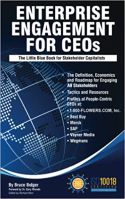
3. Books on implementation: Enterprise Engagement for CEOs and Enterprise Engagement: The Roadmap.
4. Advisory services and research: Strategic guidance, learning and certification on stakeholder management, measurement, metrics, and corporate sustainability reporting.
5. Permission-based targeted business development to identify and build relationships with the people most likely to buy.
Contact: Bruce Bolger at TheICEE.org; 914-591-7600, ext. 230.