

Those Who Cause the Pain Should Feel the Pain
By Gary Rhoads
Rhoads is EEA Academic Director, Professor Emeritus, Professor of Marketing, Marriott School of Business, Brigham Young University.
The Distance Problem
What Happens When People Meet
Why This Works
Should CEOs Feel the Pain Too?
A Culture of Constructive Accountability
The Standard We Set
Click here to subscribe to the ESM weekly e-newsletter.
 Should CEOs or other leaders themselves be required to feel the consequences of the problems their organizations create? It’s an uncomfortable question—but it’s one that has guided much of my work over the years in business and academia. I have long believed in a simple principle: Those who cause the pain should feel the pain.
 Not in a punitive sense. Not in a shaming sense. But in a human sense. Because when the people responsible for decisions, designs, policies, or processes are insulated from the consequences of those decisions, real learning rarely occurs. And without learning, problems persist.
The Distance Problem
Large organizations are extraordinarily good at creating distance. Engineers are separated from customers. Executives are separated from frontline employees. Policy makers are separated from the real-world effects of their policies. When distance increases, empathy decreases. When empathy decreases, accountability weakens. And when accountability weakens, performance—and sometimes lives—are at risk.
Over the years, whenever I encountered a serious organizational problem—whether in sales performance, service breakdowns, product failures, or employee burnout—I followed a consistent practice: bring the people creating the process face-to-face with the people living with its consequences. Not through surveys. Not through dashboards. Not through filtered reports. Through direct human conversation.
What Happens When People Meet
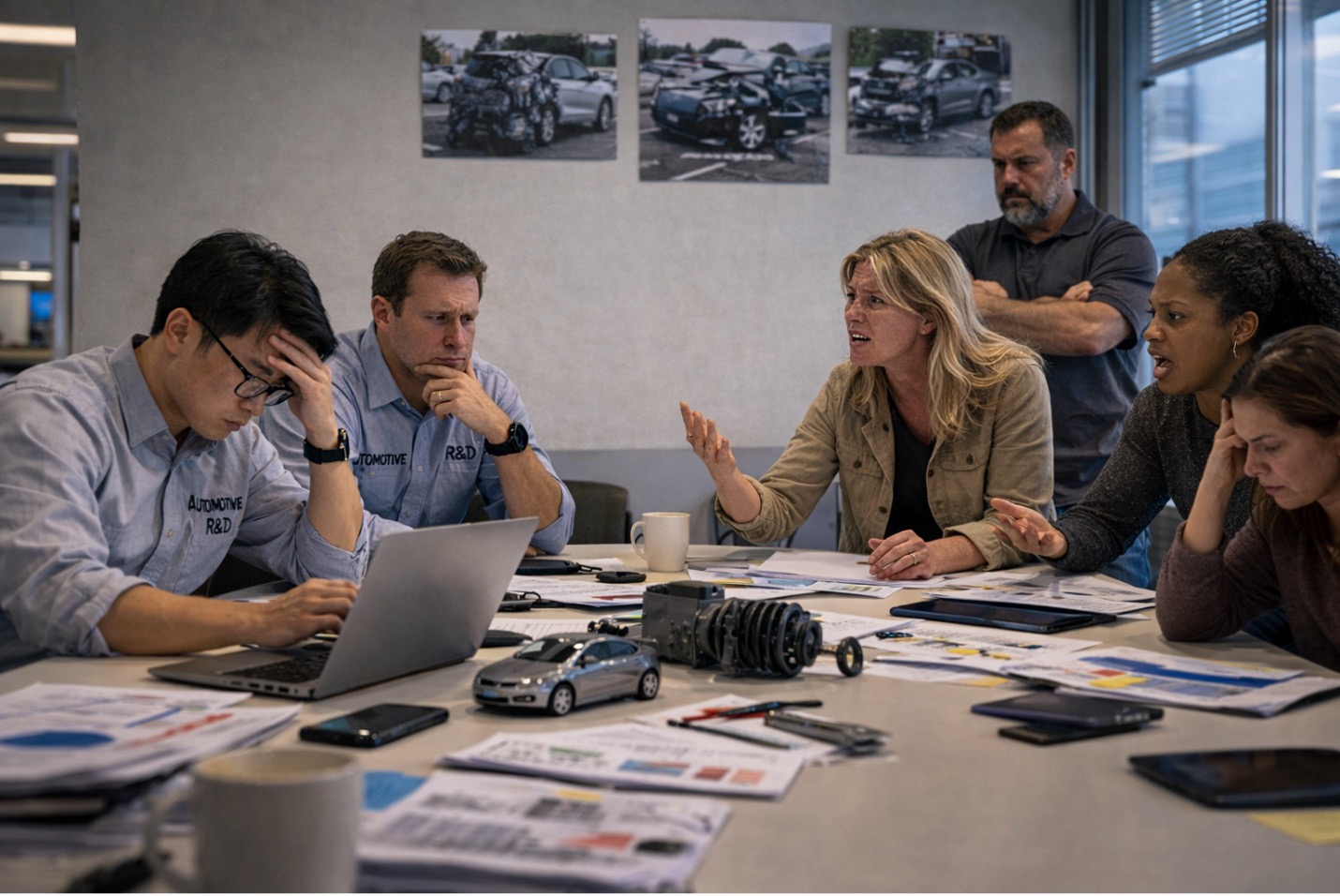
In one organization I worked with, recurring customer complaints were being dismissed as “isolated incidents.” Engineers insisted the product met specifications. The service team insisted customers were misusing it. The data was debated endlessly. So, we stopped debating. We brought the engineers into the same room with customers who were struggling. No scripts. No defensiveness. Just structured, facilitated conversation. The shift was immediate.
When customers explained how a design choice affected their operations, and engineers saw the frustration on their faces, the conversation changed from “Is this really our fault?” to “How do we fix this?” Something powerful happens when abstraction becomes personal. Spreadsheets don’t evoke responsibility. People do.
One of the most sobering examples involved a company that manufactured braking systems linked to fatal accidents. The organization’s initial response was legalistic and defensive. The systems met internal standards. Failures were attributed to “external factors.” But the consequences were devastating: families had lost loved ones. Eventually, a decision was made that changed everything. The company brought its engineers and senior leaders into direct meetings with the families of the victims.
Not for a public relations exercise. Not for litigation strategy. But to listen. It did not take long for the conversation to shift. When engineers heard firsthand what had happened—and when they saw the human cost—denial became untenable. Urgency replaced resistance. The company moved quickly to address design flaws that had previously been rationalized. No one in that room left unchanged. This is not about blame. It is about ownership. When the human consequences of our decisions are visible, our priorities clarify.
Why This Works
From an enterprise engagement standpoint, this principle aligns with what we know about performance systems:
- Feedback must be direct and meaningful. The closer feedback is to real consequences, the stronger its impact.
- Engagement increases when people see purpose. Engineers do not enter their field to harm people. When they reconnect with the purpose of their work—protecting lives—their intrinsic motivation activates.
- Systems improve when silos dissolve. Organizational problems often persist because no one feels full responsibility. Face-to-face interaction collapses the silos.
When those who design, decide, or lead experience the real-world effects of their actions, accountability stops being theoretical. It becomes personal. And personal accountability drives change.
Should CEOs Feel the Pain Too?
Which brings us back to the uncomfortable question: Should CEOs themselves practice this principle? If those who cause the pain should feel the pain, what does that mean at the highest levels of leadership? Should executives whose cost-cutting decisions result in unsafe workloads spend time working alongside overstretched teams? Should leaders of companies responsible for harmful products meet directly with affected customers? Should boards require immersive exposure to frontline realities or customer service experiences—not curated tours, but unfiltered dialogue?
In my experience, the answer is yes. Leadership carries both authority and moral responsibility. The further removed leaders become from consequences, the more likely they are to rely on abstractions—earnings per share, quarterly targets, efficiency ratios. But organizations are not abstractions. They are systems of people affecting other people. If enterprise engagement teaches us anything, it is that performance and humanity are not competing forces. They are mutually reinforcing. When leaders understand the lived experiences of employees and customers, they make better decisions—economically and ethically.
A Culture of Constructive Accountability
To be clear, this principle should not create fear. It should create learning. The goal is not to punish engineers, managers, or executives. The goal is to build systems where feedback loops are tight, transparent, and human.
When organizations institutionalize this practice—regularly connecting decision-makers with those affected by their decisions—they create cultures of constructive accountability. Problems surface faster. Defensiveness declines. Innovation accelerates. Trust increases. Most importantly, harm is reduced.
The Standard We Set
In the end, “those who cause the pain should feel the pain” is not a slogan. It is a discipline.
It requires courage from leaders; humility from experts, an eagerness to listen. But when practiced consistently, it transforms organizations. So, I return to the question for every leader reading this: Are you close enough to the consequences of your decisions? If not, the solution may be simpler than you think. Close the distance. Bring people together. Let those who cause the pain, feel the pain. That is where real change begins.
Enterprise Engagement Alliance Services
 Celebrating our 17th year, the Enterprise Engagement Alliance helps organizations enhance performance through:
1. Information and marketing opportunities on stakeholder management and total rewards:
- ESM Weekly on stakeholder management since 2009. Click here to subscribe; click here for media kit.
- RRN Weekly on total rewards since 1996. Click here to subscribe; click here for media kit.
- EEA YouTube channel on enterprise engagement, human capital, and total rewards since 2020
 Management Academy to enhance future equity value for your organization.
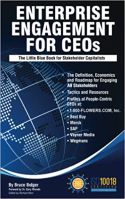
3. Books on implementation: Enterprise Engagement for CEOs and Enterprise Engagement: The Roadmap.
4. Advisory services and research: Strategic guidance, learning and certification on stakeholder management, measurement, metrics, and corporate sustainability reporting.
5. Permission-based targeted business development to identify and build relationships with the people most likely to buy.
Contact: Bruce Bolger at TheICEE.org; 914-591-7600, ext. 230.