
Using the Nominal Group Technique to Build Aligned and Actionable Plans
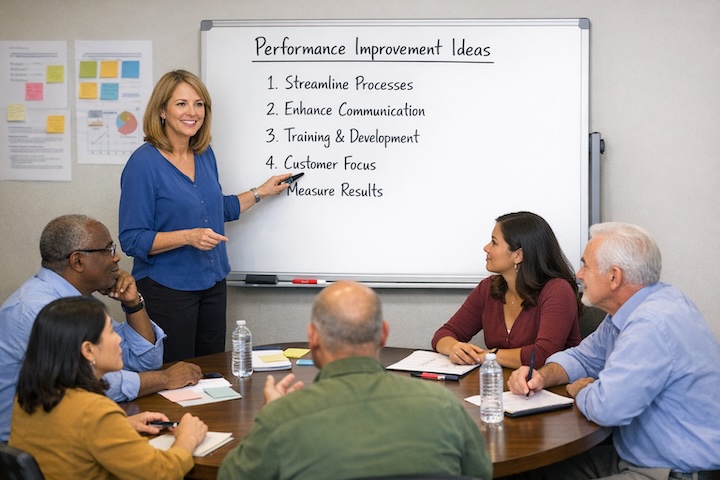 Here’s an overview of one of the most critical ways to design effective engagement programs—the Nominal Group Technique, developed for and commonly used in the world of total quality management to build voice, agency, and continuous improvement into any planning process.
 Why NGT Is Essential for Effective Planning
Supporting Stakeholder-Centered Thinking
Click here to subscribe to the ESM weekly e-newsletter.
Organizations and teams often struggle not because they lack goals, but because there is insufficient alignment around priorities, assumptions, and stakeholder needs. The Nominal Group Technique (NGT) offers a practical, structured approach to developing plans that clearly support an organization’s or team’s purpose, goals, and objectives, while ensuring broad participation and shared ownership.
NGTs also help break down silos and build camaraderie, because people generally are drawn from different parts of the organization or team almost ensuring built in diversity of voices and perspectives.
Why NGT Is Essential for Effective Planning
Traditional planning sessions can be dominated by senior voices, quick consensus, or abstract discussion. NGT addresses these challenges by combining individual reflection with group prioritization. This structure is especially valuable when developing plans that must account for multiple stakeholders and perspectives—an issue central to effective enterprise- or team-wide engagement.
When used for planning, NGT typically begins with a clearly framed question for an organization, a division, a team, or project, such as:
- Brand architecture—what is our organization’s or team’s purpose, goals, objectives, and values?
- What actions would most effectively advance our purpose, goals, objectives, and values over the next 12 months?
- What outcomes matter most to our key stakeholders?
Generally, participants include representatives of all stakeholders involved, and, when possible, a mix of personalities to ensure that quiet voices are equally heard. The facilitator uses a round-robin approach to ensure each person has a chance to give voice, although all are free to pass on a round of questions or votes.
Based on the purpose, participants first generate ideas independently, which helps surface a wider range of insights, including operational realities, stakeholder concerns, and risks that might otherwise go unspoken. Ideas are then shared systematically, clarified, reviewed in a systematic manner led by a facilitator, and ranked through a round-robin voting process.
The result is a prioritized set of actions or objectives that reflect collective judgment rather than individual influence.
Supporting Stakeholder-Centered Thinking
Within the context of enterprise engagement and stakeholder management, NGT reinforces a critical discipline: listening before deciding. By giving equal weight to voices from different functions or stakeholder-facing roles, the technique helps organizations:
- Identify misalignments between stated goals and stakeholder experience
- Balance short-term performance pressures with long-term trust and value creation
- Translate abstract purpose statements into concrete, prioritized actions
This disciplined approach aligns well with enterprise engagement frameworks that emphasize clarity, consistency, and accountability across the organization.
NGT is most effective when used as part of an ongoing planning and review cycle. Repeating the process at key intervals allows teams to reassess priorities as stakeholder needs, operating conditions, and strategic goals evolve.
In this way, the Nominal Group Technique becomes less about meetings and more about building a shared, evidence-informed approach to decision-making—one that supports purpose-driven performance and responsible stakeholder management.
Enterprise Engagement Alliance Services
 Celebrating our 17th year, the Enterprise Engagement Alliance helps organizations enhance performance through:
1. Information and marketing opportunities on stakeholder management and total rewards:
- ESM Weekly on stakeholder management since 2009. Click here to subscribe; click here for media kit.
- RRN Weekly on total rewards since 1996. Click here to subscribe; click here for media kit.
- EEA YouTube channel on enterprise engagement, human capital, and total rewards since 2020
 Management Academy to enhance future equity value for your organization.
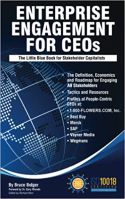
3. Books on implementation: Enterprise Engagement for CEOs and Enterprise Engagement: The Roadmap.
4. Advisory services and research: Strategic guidance, learning and certification on stakeholder management, measurement, metrics, and corporate sustainability reporting.
5. Permission-based targeted business development to identify and build relationships with the people most likely to buy.
Contact: Bruce Bolger at TheICEE.org; 914-591-7600, ext. 230.