

Education Overview: Where to Master Engagement Strategies and Tactics
Enterprise Engagement: Enterprise Engagement Alliance
Human Capital Management and Reporting – HR Metrics
Culture – Appreciation at Work
Compensation, Benefits, and Total Rewards – World at Work
Performance Improvement – International Society for Performance Improvement
Training: Association for Talent Development
Recognition – Recognition Professionals International
Customer Loyalty—The Loyalty Academy
Incentive Management – Incentive Marketing Association
Meetings: MPI Academy
Incentive Travel and Motivational Events: Society for Incentive Travel Excellence
Click here to subscribe to the ESM weekly e-newsletter.
To engage customers, employees, distribution and supply chain partners, communities, or just about anyone requires a unique set of strategic and tactical skills, starting with brand architecture (an organization’s purpose, goals, objectives, and values); leadership; culture; voice and feedback; communication in all its forms; collaboration and innovation; job design; rewards and recognition; diversity, equity, inclusion, human capital analytics, and even more.
As in any profession, it’s impossible for people to specialize in every dimension of engagement, but it’s critical to have a solid understanding of the main tactics and how to better align them toward a common purpose.
To become an expert in engagement, don’t bother looking to the executive or professional education world for many programs specifically on how to engage stakeholders either in business, government, not-for-profits or even in our personal lives: there are almost none. Only the Enterprise Engagement Alliance focuses on providing a comprehensive program on how to design, implement, and measure a strategic approach to engagement across the enterprise. On the other hand, multiple associations address specific areas of engagement.
Here’s a list of 11 programs covering many aspects of engagement, organized generally from strategic to tactical (not from better to worse.)
Enterprise Engagement: Enterprise Engagement Alliance 
The Enterprise Engagement Alliance (EEA) education program provides a comprehensive overview of how organizations and leaders at any level can align purpose, strategy, and stakeholder interests into a coherent, measurable system. Rather than focusing on a single discipline, it presents an umbrella framework for understanding how the many “people practices” inside an organization—compensation, benefits, performance management, engagement, communications, leadership, customer experience, and community impact—work together to drive sustainable results.
Grounded in the principles of Total Quality Management (TQM) and continuous improvement, the
program applies systems thinking to people management. Participants learn how to define a clear organizational purpose, translate it into measurable goals and objectives, align stakeholder expectations, and implement feedback loops that promote ongoing improvement. The program offers a practical structure for leadership discussions that harmonize values, strategy, incentives, and performance metrics across departments and stakeholder groups.
The program is designed for leaders of any kind: executives; management in sales, marketing, and human resources management; compensation and total rewards, learning and development professionals, consultants, and cross-functional managers who need to address the big picture. It is particularly valuable for leaders responsible for aligning multiple initiatives and ensuring that engagement, rewards, and performance systems support a common purpose rather than operating in silos. These principles can also be used for family or other private matters require harmonizing the interests of all stakeholders.
Click here for more information or to register.
Human Capital Management and Reporting – HR Metrics
As the global economy shifts from tangible to intangible value creation, human capital has emerged as a primary driver of organizational performance. Today, nearly 90% of the market value of S&P 500 companies is attributed to intangible assets, with human capital representing the largest share followed by marketing and customer service. In this environment, boards and investors increasingly expect clear, measurable evidence that workforce investments generate sustainable returns. This program helps human resources and related management master the principles of a value-based approach to human capital reporting.
This course explores why strategic HR metrics are essential for boards, senior management and human resources. It positions human capital not as an operational expense, but as a long-term value creator. Participants learn how evidence-based HR metrics enhance governance by strengthening accountability in leadership, succession, and workforce productivity decisions. The program also demonstrates how aligning HR metrics with business strategy ensures that talent investments deliver measurable organizational value, while improving transparency, compliance, and risk management.
A central foundation for the course is the ISO 30414:2025 human capital framework — the world’s first international standard for human capital reporting and disclosure. ISO 30414 provides a comprehensive framework of 69 standardized metrics across 11 key areas, including workforce composition, diversity, productivity, health and well-being, leadership, ethics, recruitment, succession, turnover, and skills development. The standard supports both internal management reporting and external disclosure, aligning organizations with ESG expectations and global governance standards.
Participants gain practical insight into how ISO 30414 simplifies HR reporting, enhances credibility with capital markets, and strengthens the strategic positioning of HR as a business influencer. The program also introduces organizational services such as HR audits for development and certification, as well as professional certification pathways for individuals. Designed for board members, HR and related leaders, governance professionals, and executives, this course equips organizations to measure, manage, and communicate the true value of their human capital — turning workforce data into strategic advantage.
Click here to learn more and to register.
Culture – Appreciation at Work 
Appreciation at Work offers the world’s only training on enhancing culture through appreciation, based on the principles of the 5 Languages of Appreciation in the Workplace, now available in 25 languages, with over 600,000 copies sold.
The Appreciation at Work training programs support managers at any level seeking to develop a consistent, supportive culture based on appreciation, now demonstrated by research to be a major factor in future equity value creation. The training comes in the form of the book, online training, exercises and a test on the principles of the five languages through which to most effectively express appreciation based on individual preferences. Recipients of the certification can access an assessment tool for each employee as well as a before and after culture assessment survey of the people involved.
The training prepares organizations for the Appreciation at Work® Certified Workplace program. This is a research-based culture transformation process designed to help organizations build workplaces where people feel genuinely valued; where they are not just recognized for performance but appreciated as individuals.
Unlike traditional recognition programs that focus primarily on results or rewards, this certification centers on authentic appreciation. It equips leaders and teams to understand how each employee prefers to receive appreciation and teaches practical, sustainable ways to express it in daily work life. The result is stronger connection, increased engagement, and a healthier organizational culture.
Through the certification process, employees complete an anonymous Appreciation at Work Workplace survey that measures how valued and supported they feel. From the survey results, organizations receive an Appreciation at Work Rating Score. Companies that meet certification standards earn a digital badge and marketing toolkit to showcase their commitment to a people-first culture.
Certified Workplaces also gain access to ongoing HR leadership training, a full resource library, and practical tools to address real-world challenges such as remote engagement, generational differences, conflict, burnout, underperformance, and rebuilding trust.
Research consistently shows that employees rarely leave solely for compensation; many leave because they don’t feel appreciated. By embedding authentic appreciation into everyday leadership practices, organizations improve retention, strengthen recruitment, elevate morale, and create environments where performance and well-being thrive together. It’s more than recognition. It’s about building a culture where appreciation drives retention and results.
Click here to learn more and to register. Use code RRNEEA26 for 10% off the annual cost of any Appreciation at Work program.
Compensation, Benefits, and Total Rewards – World at Work 
The WorldatWork Certification Program is a comprehensive professional education path designed to build deep expertise in compensation, benefits, and total rewards—the strategic framework organizations use to attract, motivate, and retain talent. Offered by WorldatWork, a global leader in total rewards education and standards since the 1950s, these certifications are widely recognized in human resources and increasingly preferred by hiring managers, according to the organization—making them a powerful credential for advancing a career in HR, compensation, or benefits strategy.
At its core, the program helps individuals master the theory and practical application of reward program design, regulatory compliance, strategic communication, and performance-linked pay. The suite of credentials includes foundational and specialized certifications such as the Certified Compensation Professional (CCP), Global Remuneration Professional (GRP), Certified Benefits Professional (CBP), Certified Executive Compensation Professional (CECP), and Certified Sales Compensation Professional (CSCP). According to the organization, each is tailored to specific roles and career pathways—from total rewards generalists to specialists in executive or international pay.
Benefits for learners: certification holders gain industry-validated expertise, enhanced credibility, and leadership positioning in their field. Many professionals report stronger job performance, greater confidence, and improved career mobility after earning a credential. WorldatWork certifications are also associated with competitive compensation outcomes and recognition by major employers.
The program is designed for HR professionals, compensation analysts, benefits managers, total rewards strategists, and consultants seeking to formalize their skills and implement effective reward strategies aligned with organizational goals. Learners engage with structured coursework and exams that test both technical knowledge and practical capability. Courses are delivered through flexible formats—including online self-paced and instructor-led options—while exams are proctored and designed to verify mastery of core competencies.
In sum, WorldatWork certifications offer a rigorous yet accessible path to professional distinction in the critical, complex field of compensation and total rewards.
Click here for more information or to register.
Performance Improvement – International Society for Performance Improvement 
The Certified Performance Technologist (CPT) designation is a professional credential offered by the International Society for Performance Improvement (ISPI) that recognizes individuals who demonstrate consistent, measurable success in improving performance in real-world settings. Rather than relying on classroom training or a traditional exam, the CPT credential is competency-based, requiring applicants to document and validate how their work meets ISPI’s 10 performance improvement standards across multiple projects.
At its core, the CPT program is about practical performance improvement expertise, the organization states. Candidates must show a minimum of three years of relevant experience and submit evidence—such as detailed project descriptions and attestations from supervisors or clients—that illustrate their ability to systematically analyze performance issues, design effective solutions, and produce measurable results. Applicants also commit to ISPI’s Code of Ethics, reinforcing professional standards and ethical practice.
The target audience for the CPT credential includes performance improvement practitioners, learning and development professionals, organizational consultants, HR specialists, managers, and others whose work focuses on enhancing individual or organizational performance. Because the certification is based on demonstrated outcomes rather than coursework, it appeals to experienced professionals who want to validate their impact and stand out to employers and clients.
Benefits of earning the CPT, the organization says, include enhanced credibility, a clear signal to employers of proven performance expertise, and differentiation in a competitive job market. Organizations increasingly use the CPT as a benchmark when hiring performance improvement professionals or evaluating consultants. Additionally, CPT holders often report stronger professional recognition and opportunities for career growth. Overall, the CPT program is designed to be a rigorous, practice-oriented certification for experienced professionals committed to measurable performance improvement and ongoing professional development.
Click here for more information.
Training: Association for Talent Development 
The Trainer/Facilitator education programs offered through the Association for Talent Development (ATD) provide structured professional development for individuals responsible for designing, delivering, and facilitating learning experiences in the workplace. ATD’s training curriculum is grounded in research and aligned to the Talent Development Capability Model™, ensuring that participants acquire practical skills that support measurable organizational results.
At the core of the offerings is the Training and Facilitation Certificate, a train-the-trainer program that helps both new and experienced trainers enhance their ability to engage learners and deliver impactful instruction. This certificate program covers the full training lifecycle — from planning and preparation to facilitation, learner engagement, and post-session follow-up. Participants explore adult learning science, classroom dynamics, and practical techniques through hands-on practice and receive personalized feedback from expert facilitators. Upon completion, learners earn an industry-recognized certificate and a digital badge to showcase their achievement.
In addition to the foundational certificate, ATD offers specialized programs such as the Virtual Training and Facilitation Certificate, which focuses on creating engaging online learning experiences, and the Training Design and Delivery Certificate, which combines instructional design with facilitation skills for a holistic approach.
For experienced professionals seeking advanced mastery, ATD’s Master Trainer® Program is an immersive, assessment-based journey that elevates facilitation, consultative training skills, and the ability to align learning initiatives with business outcomes. Graduates earn the respected Master Trainer® designation and digital credential.
These programs are designed for corporate trainers, learning and development professionals, instructional designers, training managers, consultants, and subject matter experts who lead learning experiences. Whether a newcomer looking to build a strong foundation or a seasoned practitioner aiming to refine strategic training skills, ATD’s trainer education portfolio supports professional growth, enhances credibility, and equips individuals to drive meaningful learning and performance improvements in their organizations.
Click here for more information and to register.
Recognition – Recognition Professionals International
The Certified Recognition Professional (CRP) program is a professional certification offered by Recognition Professionals International (RPI), a nonprofit organization and global leader in workforce recognition best practices and education. The CRP designation is designed to equip practitioners with the knowledge and skills needed to design, implement, and manage effective employee recognition programs that align with organizational goals and drive measurable results.
At its core, the CRP program is a comprehensive educational sequence built on RPI’s 7 Best Practice Standards®, which encapsulate the foundational principles of strategic recognition. Participants explore key aspects of recognition program development including strategic planning, communication, role definition, measurement, training, celebratory events, and flexibility to adapt to change.
The program benefits HR professionals, recognition specialists, managers, consultants, and solution providers who are responsible for fostering employee engagement, culture, and performance. By completing the program, individuals distinguish themselves as skilled practitioners capable of creating recognition initiatives that contribute to retention, productivity, teamwork, and organizational culture.
- A structured curriculum covering seven core recognition modules.
- Attendance at a virtual workshop or equivalent training sessions.
- Completion of an open-book exam based on course material.
- Earning the CRP designation, which signals mastery of industry best practices.
- Ongoing professional credibility and networking as part of a community of recognition practitioners.
Click here to learn more and to register.
Customer Loyalty—The Loyalty Academy 
The Loyalty Academy™ is a global education and membership organization dedicated to advancing the discipline of loyalty marketing for professionals worldwide. Founded as part of the Wise Marketer Group, it offers a formalized curriculum, professional development, and certification specifically tailored for those responsible for customer loyalty strategies, program design, and execution across industries.
At its core, the Academy provides a structured educational pathway that includes online, in-person, and customized in-house workshops, seminars, and self-paced courses delivered by experienced loyalty marketing practitioners. Courses span foundational topics such as the psychology of loyalty, loyalty program business models, reward design, analytics, communications, and financial modeling—each designed to equip learners with the practical skills needed to build and lead effective loyalty initiatives.
A central offering is the Certified Loyalty Marketing Professional™ (CLMP) credential, the industry’s globally recognized certification. To earn this designation, participants complete a minimum of 15 units of coursework—including a core curriculum, electives, and a final exam or case study—within a three-year period. Upon successful completion, individuals can use the CLMP designation professionally, demonstrating mastery of loyalty marketing principles and best practices.
The Academy also hosts annual certification workshops around the world, providing intensive two- to three-day experiences that combine expert instruction, case studies, and interactive problem solving. These workshops allow participants to achieve full certification in an immersive format.
In addition to education and certification, Loyalty Academy members gain access to exclusive tools, research, publications, networking opportunities, and discounts on events and courses, helping them stay current with industry trends and connect with a global community of loyalty professionals.
Click here for more information or to register.
Incentive Management – Incentive Marketing Association
The Certified Professional of Incentive Management (CPIM) is the professional designation designed for incentive, rewards, and recognition professionals who want to deepen their expertise, demonstrate leadership, and elevate their credibility in the incentive industry. Offered by the Incentive Marketing Association (IMA)—a global organization representing leadership across the incentive and recognition market—the CPIM recognizes individuals who have mastered the principles and best practices that drive effective incentive program design and management.
This designation is designed for professionals actively working in incentive marketing, employee recognition, customer loyalty, sales motivation, and related fields who have at least two years of industry experience. Candidates typically include incentive program designers, account managers, consultants, and business leaders looking to distinguish themselves as industry experts.
CPIM candidates first earn the Incentive Professional (IP) designation by passing a comprehensive exam rooted in the Principles of Results-Based Incentive Program Design curriculum. They then complete a point-based assessment that showcases their real-world experience, leadership contributions, and continued professional development. The process is designed to deepen understanding of incentive strategy, implementation, evaluation, and emerging trends shaping the industry.
Earning the CPIM establishes recipients as a trusted authority, enhances your professional standing, and signals a commitment to ongoing education and industry excellence. It also provides a competitive advantage in the marketplace, expands your professional network, and keeps you current with the latest research and best practices. Certified professionals must renew every three years, reinforcing lifelong learning and industry engagement.
Click here to register and to learn more.
Meetings: MPI Academy
The Meetings Professionals International certificate programs are a suite of professional development and education offerings within the MPI Academy, designed to help individuals in the meetings and events industry build and expand essential skills for successful career advancement. These programs deliver targeted training through online, in-person, and on-demand learning formats, providing flexibility for working professionals to learn at their own pace or engage in structured classroom-style instruction.
These certificate courses cover a wide range of topics critical to modern event planning and management. Offerings include foundational courses like Meeting Fundamentals and Contract and Negotiation Specialist, specialized competencies such as Emergency Preparedness, Event Wellness Design, Inclusive Event Strategy, and advanced programs including the Certificate in Meeting Management (CMM) and business-oriented masterclasses.
The programs are tailored for a broad audience, from entry-level and emerging professionals seeking to establish core industry skills, to mid-career and seasoned event planners looking to deepen their strategic expertise. There are also specialized designations such as the Emerging Meeting Professional (EMP) designation, created to help newer professionals solidify competencies and stand out in the job market.)
Key benefits of MPI certificate programs include:
- Skill enhancement: Participants gain practical, job-relevant knowledge in areas such as event strategy, leadership, risk management, sustainability, and technology integration.
- Career advancement: Certificates signal professional commitment and expertise to employers and clients, helping with job growth and credibility.
- Flexibility: With a mix of live, on-demand, and self-paced options, professionals can integrate learning into busy schedules.
- Industry recognition: Many programs offer clock hours toward other certifications (e.g., CMP) and digital badges that can be showcased on resumes and LinkedIn.
Incentive Travel and Motivational Events: Society for Innovation in Incentive Travel. 
The SITE Global Certification programs are professional credentials developed by the Society for Incentive Travel Excellence (SITE) to elevate expertise and credibility within the incentive travel and motivational experiences industry. SITE is the only global business events association dedicated exclusively to incentive travel, with members spanning corporations, agencies, suppliers, and destinations worldwide.
SITE currently offers two core certifications tailored to different career stages. The Certified Incentive Specialist (CIS) serves as an entry-level credential designed for emerging professionals, students, educators, and those new to this specialized segment of the meetings and events industry. Delivered through flexible online or workshop formats, the CIS curriculum covers essential topics such as the fundamentals of incentive and motivational programs, the origins and value of incentive travel, market composition, program design and budgeting, and key industry tools and platforms. Successful candidates complete a final exam to earn the CIS designation and join a global community of certified specialists.
For more experienced practitioners, the Certified Incentive Travel Professional (CITP) is a mid-management level certification. It is designed for professionals with significant hands-on experience in incentive travel sales, planning, design, and management. Candidates must demonstrate a minimum of five years of relevant industry experience (or three years plus CIS) to qualify. The CITP curriculum and exam assess strategic planning, program design, stakeholder engagement, financial and risk management, and other advanced competencies central to leadership in incentive travel.
Benefits of these SITE certifications include enhanced professional credibility, deeper industry knowledge, and stronger competitive positioning in a growing global market. They signal mastery of core concepts and best practices to employers, clients, and peers, support career progression, and connect certified professionals to SITE’s international network of industry leaders. Together, the CIS and CITP programs help individuals at different stages of their careers build practical skills, demonstrate commitment to excellence, and contribute to the success of incentive travel as a powerful business strategy.
Click here for more information and to register.
Enterprise Engagement Alliance Services
 Celebrating our 17th year, the Enterprise Engagement Alliance helps organizations enhance performance through:
1. Information and marketing opportunities on stakeholder management and total rewards:
- ESM Weekly on stakeholder management since 2009. Click here to subscribe; click here for media kit.
- RRN Weekly on total rewards since 1996. Click here to subscribe; click here for media kit.
- EEA YouTube channel on enterprise engagement, human capital, and total rewards since 2020
 Management Academy to enhance future equity value for your organization.
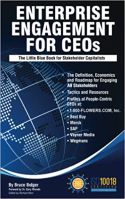
3. Books on implementation: Enterprise Engagement for CEOs and Enterprise Engagement: The Roadmap.
4. Advisory services and research: Strategic guidance, learning and certification on stakeholder management, measurement, metrics, and corporate sustainability reporting.
5. Permission-based targeted business development to identify and build relationships with the people most likely to buy.
Contact: Bruce Bolger at TheICEE.org; 914-591-7600, ext. 230.