

Why Engagement Has Never Become the Next TQM
By Bruce Bolger
 Background
 Why TQM Took Off
Why the Engagement Field Has Never Fully Materialized
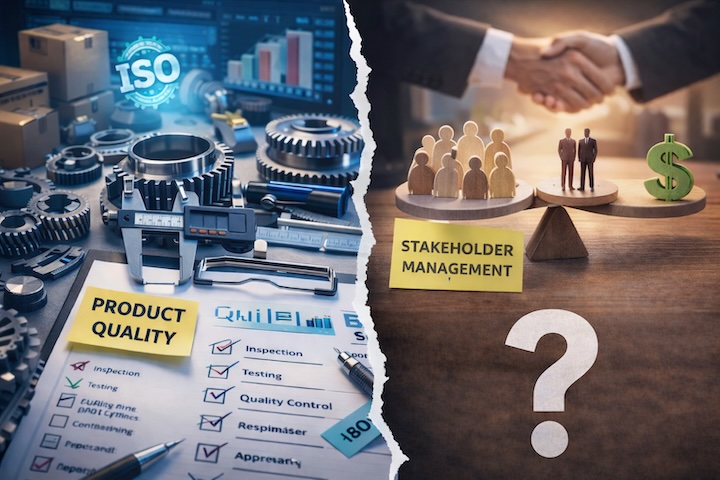
The Core Contrast
What Would Allow the Engagement Field to Emerge
Click here to subscribe to the ESM weekly e-newsletter.
Total quality management did not succeed because organizations cared more about quality—it succeeded because quality became measurable, teachable, economically unavoidable, and because its proponents largely collaborated. The world of stakeholder engagement will only follow a similar path when it is treated not as an initiative or philosophy, but as a core operating discipline grounded in economics, systems, and shared standards. The movement has economics on its side, increasingly driven by human capital capiital analytics and AI.
According to estimates by Gallup and the American Customer Satisfaction Index, employee and customer remain near record lows. The world economy buries potentially trillions of dollars of waste into their bottom lines as a result, probably equal to the amount of waste in manufacturing until the advent of total quality management.
Aren’t historic levels of customer and employee disengagement a serious issue to address? Here’s what the engagement movement can learn from the world of total quality management (TQM.)
Background
The world of people engagement mirrors that of TQM in the 1980s: fractured and chaotic. There was lots of debate and discussion about poor quality and many different theories, but little coordinated action until the Japanese successfully deployed TQM practices to make damaging inroads into American and European manufacturing. It took seven years starting in 1980 for the first ISO standards in quality come into being in 1987. TQM became a matter of competitive survival. The world’s leading companies embraced ISO 9000 quality standards in the 1990s and other formal practices to make quality management “job one,” giving birth to an enormous field.
.png) The American Society of Quality reportedly has over 30,000 members and users of its services or attendees to events. An estimated one million companies in 189 countries carry or follow ISO 9001 quality management standards, according to ISO, and there are thousands of TQM consultants and possibly over one million people in management involved with quality management.
The American Society of Quality reportedly has over 30,000 members and users of its services or attendees to events. An estimated one million companies in 189 countries carry or follow ISO 9001 quality management standards, according to ISO, and there are thousands of TQM consultants and possibly over one million people in management involved with quality management. Meanwhile, there are still no formal standards on how to measure the impact of people investments or the cost of the waste. Almost no organization besides the Enterprise Engagement Alliance focuses on addressing this issue through the promotion of a strategic and systematic approach to engagement across the enterprise or of impact metrics and professional education based on TQM principles. The critical connection between customer and employee engagement remains heavily siloed at many organizations even though extensive research and common sense (and total quality management principles) call for an enterprise engagement approach.
There are few known advisory firms focusing on a holistic approach to customer and employee engagement, and no more than several dozen incentive and recognition firms in the entire world. Most of them focus more narrowly on their tactics than on providing the holistic solution linking all engagement tactics that research identifies as essential.
Why TQM Took Off
Multiple factors help explain why TQM took off, suggesting a roadmap for the world of engagement as well if it can do a better job of sharing concrete impact metrics with prospects and customers.
-
Clear economic logic
- Reducing defects, rework, and waste deliver direct, measurable cost savings.
- Gains show up quickly in margins, throughput, and customer outcomes.
-
Standardized methods and language
- Quality can be measured, benchmarked, and taught consistently.
-
The industry worked together with a culture supporting multiple tools like statistical process controls, Six Sigma, Kaizen, and ISO standards, etc. created a shared operating system, allowing for different approaches without the nomenclature battles in the world of engagement, where some debate the distinctions between employee engagement and well-being as if they are existential distinctions when they most likely are mutually dependent in terms of value creation.
-
A cohesive professional community
- Experts and practitioners coalesced into the American Society for Quality (ASQ).
- ASQ provided standards, certification, conferences, and a unifying identity.
-
A mature consulting ecosystem
- Management consultants aligned around common frameworks and playbooks.
-
Quality improvement became a scalable, repeatable business.
-
Executive legitimacy
- Proven success in manufacturing and operations made quality a CEO-level priority.
Why the Engagement Field Has Never Fully Materialized
Proponents can’t even agree on a name. Is it engagement or well-being? Is it only about employees or does it include all stakeholders. Add to that:-
Ambiguous economics and low awareness
- Engagement correlates with performance, but causal links are deemed harder to isolate.
- Financial returns are inadequately measured because of lack of know-how.
-
While AI and other analytics make it much easier to link engagement to financial results, none of these tools are taught in schools or rarely covered in the business media.
-
No shared standards or operating system
- Definitions, survey instruments, and models vary widely with little broad awareness.
- No equivalent to defect rates or process capability metrics.
-
Fragmented field with no unifying body
- Unlike ASQ, no universal organization for engagement has ever emerged.
- Major practitioners and vendors choose competition over cooperation.
- Organizational silos stand in the way of connecting employee and customer engagement.
-
Siloed thought leadership
- Academics, HR vendors, psychologists, and consultants rarely align or collaborate.
- Competing frameworks dilute credibility and slowed institutional adoption.
-
Academic and solution providers usually focus either on employee or customer engagement, despite the obvious connection between the two.
-
Positioned as “HR” rather than “management”
- Engagement is usually framed as culture, morale, or sentiment—not as a core operating discipline.
- It is easy to deprioritize when economic pressure rises because of the failure to adequately measure the impact of unhappy customers and employees.
The Core Contrast
- TQM succeeded because it translated values into economics, standards, and institutions.
- The engagement movement has stalled because it remains ad hoc, fragmented, and organizationally orphaned.
In short: TQM became a movement by aligning money, methods, and community. The engagement world never has.
What Would Allow the Engagement Field to Emerge
Timing and relevance are everything. TQM took off in the US because of the measurable, bottom-line impact of poor quality. Enterprise engagement has the potential for similar growth as organizations can increasingly measure the waste of low customer and employee engagement and investors can increasingly measure the financial benefits. Here’s what the field can learn from the growth of TQM.
Stop the nomenclature battle
- Ever since the term “engagement” arose in business in the 2000s, debates have periodically broken out in social media on whether the focus should be on engagement—fostering the proactive involvement of all stakeholders in the purpose, goals, objectives, and values of the organization—or on well-being: the sustained capacity of employees to function effectively at work and in life, reflected in their health, psychological safety, financial stability, social connection, and sense of purpose. Without a healthy culture, performance cannot be optimized, but a healthy culture does not ensure that people remained focus on their purpose, goals, objectives and values. It takes a holistic approach.
- Let the market decide the desired outcomes and solutions as is the case in TQM.
Break down the siloes
- Customer, employee, and channel partner engagement are inextricably linked.
- Find new ways to align marketing, sales, finance, HR and all departments.
Translate engagement into operational economics
- Develop widely accepted methods to quantify the cost of disengagement (turnover, absenteeism, customer churn, errors, safety incidents)--they already exist.
- Normalize engagement ROI analysis as part of financial planning and performance reviews.
- Treat customer and employee engagement waste the way quality treated defects—as a balance-sheet issue, not a cultural abstraction.
Establish shared measurement conventions
- Agree on a small set of core customer, employee and channel partner engagement indicators that can be benchmarked across organizations.
- Separate foundational metrics from optional or context-specific ones, allowing flexibility without chaos.
- Shift the conversation from survey scores to predictive and causal models tied to outcomes.
- Learn from the TQM movement--Integrate employee, customer, and partner engagement into a single management discipline rather than parallel efforts.
- Define how leadership, job design, incentives, learning, communications, and recognition interact as a system with measurable impact.
- Enable multiple tools and philosophies to coexist within a common framework—just as Six Sigma and Kaizen did within quality.
Build cross-functional ownership
- Move engagement accountability beyond HR into operations, finance, marketing, and strategy.
- Make engagement a shared management responsibility rather than a staff function initiative.
- Align incentives so leaders are rewarded for sustainable engagement outcomes, not short-term sentiment gains.
- Develop role clarity for engagement practitioners, analysts, and leaders.
- Incorporate engagement economics and systems thinking into business education, executive programs, and management training.
- Treat engagement expertise as a discipline with skill progression, not a soft skill or personality trait.
- Enable researchers, practitioners, vendors, and consultants to align on fundamentals while competing on execution.
- Reduce fragmentation by distinguishing between core principles and proprietary solutions.
- Focus collective effort on credibility and adoption rather than differentiation alone.
- Position disengagement as a systemic business risk comparable to quality failures or safety incidents.
- Emphasize resilience, adaptability, and long-term value creation—not just happiness or morale.
- Anchor engagement in enterprise performance rather than workplace sentiment.
Enterprise Engagement Alliance Services
 Celebrating our 17th year, the Enterprise Engagement Alliance helps organizations enhance performance through:
1. Information and marketing opportunities on stakeholder management and total rewards:
- ESM Weekly on stakeholder management since 2009. Click here to subscribe; click here for media kit.
- RRN Weekly on total rewards since 1996. Click here to subscribe; click here for media kit.
- EEA YouTube channel on enterprise engagement, human capital, and total rewards since 2020
 Management Academy to enhance future equity value for your organization.
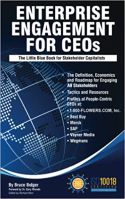
3. Books on implementation: Enterprise Engagement for CEOs and Enterprise Engagement: The Roadmap.
4. Advisory services and research: Strategic guidance, learning and certification on stakeholder management, measurement, metrics, and corporate sustainability reporting.
5. Permission-based targeted business development to identify and build relationships with the people most likely to buy.
Contact: Bruce Bolger at TheICEE.org; 914-591-7600, ext. 230.