

New Global Sustainability Rankings Signal Momentum and Persistent Blind Spots in Stakeholder Capitalism
.jpg) A new global ranking from TIME and Statista underscores growing corporate interest in stakeholder capitalism, while also revealing how narrowly sustainability is still defined in much of the business world.
A new global ranking from TIME and Statista underscores growing corporate interest in stakeholder capitalism, while also revealing how narrowly sustainability is still defined in much of the business world. Click here to subscribe to the ESM weekly e-newsletter.
Time magazine’s World’s Best Companies in Sustainable Growth 2025 list highlights firms that combine strong financial performance with low environmental impact—but notably evaluates only environmental metrics, reinforcing a continued lack of understanding of sustainability as a broader people-and-planet agenda.
The methodology behind the ranking reflects increasing recognition that financial growth and environmental responsibility are not mutually exclusive. Drawing on data from 2021 to 2023, Time and Statista assessed companies based on revenue growth and profitability relative to peers, alongside Scope 1, 2, and 3 carbon emissions, water usage, waste production, and renewable energy adoption. Companies that failed to grow financially or carried outsized environmental footprints were excluded, regardless of brand prominence.
The resulting list departs sharply from traditional corporate rankings. Many global giants—including Apple, Amazon, Microsoft, and Toyota—are absent, while midsize companies dominate roughly 70% of the top 500. Renewable-focused utilities such as Spain’s Solaria Energía y Medio Ambiente and Grenergy Renovables top the list, reflecting how clean-energy business models align growth with environmental performance. Only seven of the top 20 companies are US-based.
While the ranking demonstrates that sustainability can support profitability, its environmental-only focus exposes a key limitation in today’s ESG discourse. Missing are systematic measures of how companies treat workers, invest in communities, govern responsibly, or address inequality—core pillars of stakeholder capitalism. Even among recognizable names that made the list, such as Mastercard, Visa, BMW Group, and Coca-Cola, inclusion reflects environmental efficiency and financial growth, not necessarily commitments to social impact or human capital.
Experts cited in the analysis argue that outdated “growth versus green” thinking continues to cloud executive decision-making, despite mounting evidence that sustainability drives operational efficiency, innovation, and long-term value creation. Yet the rankings themselves illustrate how far the field still has to go in integrating environmental performance with social and human outcomes. Taken together, the 2025 list signals both progress and constraint: proof that companies can grow while reducing environmental harm, and a reminder that true stakeholder capitalism remains incomplete as long as people are treated as secondary to planet and profit in sustainability assessments.
Enterprise Engagement Alliance Services
 Celebrating our 17th year, the Enterprise Engagement Alliance helps organizations enhance performance through:
1. Information and marketing opportunities on stakeholder management and total rewards:
- ESM Weekly on stakeholder management since 2009. Click here to subscribe; click here for media kit.
- RRN Weekly on total rewards since 1996. Click here to subscribe; click here for media kit.
- EEA YouTube channel on enterprise engagement, human capital, and total rewards since 2020
 Management Academy to enhance future equity value for your organization.
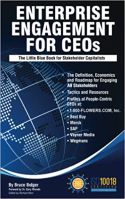
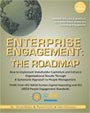
3. Books on implementation: Enterprise Engagement for CEOs and Enterprise Engagement: The Roadmap.
4. Advisory services and research: Strategic guidance, learning and certification on stakeholder management, measurement, metrics, and corporate sustainability reporting.
5. Permission-based targeted business development to identify and build relationships with the people most likely to buy.
Contact: Bruce Bolger at TheICEE.org; 914-591-7600, ext. 230.