Whitepapers
Sorry, no results matched your search.
Each year in the United States, organizations spend tens of billions of dollars on cash and non-cash rewards for consumer, distributor, sales and employee incentive programs –merchandise, gift cards, group and individual travel programs, time off, cash, etc. But few organizations invest the necessary time to understand which rewards should be used for which people to encourage what outcomes
Published by:
Each year in the United States, organizations spend tens of billions of dollars on cash and non-cash rewards for consumer, distributor, sales and employee incentive programs –merchandise, gift cards, group and individual travel programs, time off, cash, etc. But few organizations invest the necessary time to understand which rewards should be used for which people to encourage what outcomes
Published by:
Each year in the United States, organizations spend tens of billions of dollars on cash and non-cash rewards for consumer, distributor, sales and employee incentive programs –merchandise, gift cards, group and individual travel programs, time off, cash, etc. But few organizations invest the necessary time to understand which rewards should be used for which people to encourage what outcomes
Published by:
Each year in the United States, organizations spend tens of billions of dollars on cash and non-cash rewards for consumer, distributor, sales and employee incentive programs –merchandise, gift cards, group and individual travel programs, time off, cash, etc. But few organizations invest the necessary time to understand which rewards should be used for which people to encourage what outcomes
Published by:
Each year in the United States, organizations spend tens of billions of dollars on cash and non-cash rewards for consumer, distributor, sales and employee incentive programs –merchandise, gift cards, group and individual travel programs, time off, cash, etc. But few organizations invest the necessary time to understand which rewards should be used for which people to encourage what outcomes
Published by:
Each year in the United States, organizations spend tens of billions of dollars on cash and non-cash rewards for consumer, distributor, sales and employee incentive programs –merchandise, gift cards, group and individual travel programs, time off, cash, etc. But few organizations invest the necessary time to understand which rewards should be used for which people to encourage what outcomes
Published by:
There’s amusement to be had for all at a carnival. There are spinning, flashing rides, whimsical music and, of course, icy snow cones. These things came to mind when Lynne DuVivier, president of Westport, Connecticut-based The Creative Factor, Inc. (UPIC: CREATEIT) was approached by HBO to develop a campaign for its show, Carnivàle.
Published by: Promotional Consultant
Reviews the economics and objectives of customer retention and argues that it’s easier and less costly to sell to existing customers than to new customers. The more customers you keep through active retention efforts, and the longer you keep them, the more profitable your company will be.
Published by: - Performance Improvement Council of the Incentive Marketing Association -
Just how effective are promotional products as giveaways at trade shows? A 2003 study by Georgia Southern University explores how promotional products impact recipient’s perceptions of the company, usefulness of the product and much more...
Published by: Promotional Products Association International
Promotional products can increase traffic to an exhibitor’s trade show booth. A 1991 study by Exhibit Surveys Inc., found that using promotional products can give you an advantage over other exhibitors for buyer attention.
Published by: Promotional Products Association International
This study analyzed attempts by a dozen diverse companies to integrate their external and internal marketing practices.
Published by: The Forum for People Performance Management and Measurement
Marketers need not rely on their salespeople to elicit new leads for business. Existing customers are a gold mine for getting referrals—when they are asked! Through direct mail offers of promotional product incentives, marketers can leverage customer satisfaction and secure more valuable referrals. These findings are from a 2005 customer "referencing" study done by an advertising faculty at Louisiana State University and Glenrich Business Studies. *
Published by: Promotional Products Association International
An experiment conducted by Georgia Southern University shows that recipients of promotional products have a significantly more positive image of a company than consumers who do not receive promotional products.
Published by: Promotional Products Association International
Once again we see statistically how well promotional products can help market business, thanks to a 2004 study by L.J. Market Research.
Published by: Promotional Products Association International
Many traditional forms of advertising and promotion are losing ground
to newer media. This trend presents opportunities for the promotional
products medium. However, very little research exists documenting the
effectiveness of promotional products when compared to and combined
with other traditional forms of advertising such as television and print.
Published by: Promotional Products Association International
This white paper highlights four key areas that impact organizational adoption of integrated marketing and motivate employees to think about and cooperate with integrated marketing efforts beyond their functional silos.
Published by: Forum for People Performance Management and Measurement
There’s amusement to be had for all at a carnival. There are spinning, flashing rides, whimsical music and, of course, icy snow cones. These things came to mind when Lynne DuVivier, president of Westport, Connecticut-based The Creative Factor, Inc. (UPIC: CREATEIT) was approached by HBO to develop a campaign for its show, Carnivàle.
Published by: Promotional Consultant
This study, sponsored by the Incentive Research Foundation (IRF), looks at questioins that are rarely posed in relation to sales incentive programs: How do sales incentives affect procurement and cost of goods? Shipping? Cash flow? It suggests that developing an incentive program with a focus on sales growth alone, with no consideration for other business functions can produce 1) an adverse affect on cash flow, 2) a possible disruption in supplies, 3) extra shipping costs for ordered merchandise, and 4) a possible impact on customer quality. A "business process" approach, on the other hand, one that takes into account the impact on other business functions, "enables the planning and creation of the needed infrastructure and additional investments, where necessary, to support the results arising from the sales incentive program," the author says.
Published by: Incentive Research Foundation
A study designed to determine which aspects of selling respond to incentive travel and how that response can be measured. Researchers surveyed 1,800 subscribers of Meetings and Incentive Travel magazine and 3,000 members of the Canadian Automobile Dealers Association. To present an in-depth picture of incentive travel, and to provide a practical template for determining program ROI, the authors made a point of recording views of both the people who win the awards and those executives who allocate the money to fund them.
Published by: Incentive Research Foundation
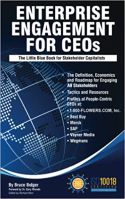
In many industries and businesses, channel partners are key links between employees and customers- a weak link if they are ignored, an important source of strength if they are engaged. The stakes are high. Channel partner impact can be enormous in terms of sales volume, market share, brand reputation and “share of customer”, i.e., in engaging customers. Indeed, channel partners are often the sole link to the customer. But channel partners can also impact employee engagement, especially when they fail to deliver. Conversely, channel partner engagement is directly affected by the employees who manage them and who produce the products and services. In short, most businesses succeed only to the degree that symbiotic relationships exist between employees, customers, channel partners and vendors. This is the basis upon which “Enterprise Engagement” is built. In this paper, we focus on channel partners as a key constituent of organizational success and we offer practical strategies and tactics to engage them.
Published by:
Reviews the economics and objectives of customer retention and argues that it’s easier and less costly to sell to existing customers than to new customers. The more customers you keep through active retention efforts, and the longer you keep them, the more profitable your company will be.
Published by: - Performance Improvement Council of the Incentive Marketing Association -
Just how effective are promotional products as giveaways at trade shows? A 2003 study by Georgia Southern University explores how promotional products impact recipient’s perceptions of the company, usefulness of the product and much more...
Published by: Promotional Products Association International
This study, by Prof. James Oakley of Ohio State University, found a clear link between employee engagement and customer satisfaction, and customer satisfaction and profitability.
Published by: The Forum for People Performance Management and Measurement
In 1999, the Incentive Federation requested that the Center for Concept Development conduct focus groups with incentive users in the New York, Los Angeles, Dallas, Chicago, and Atlanta areas.
Published by: Center for Concept Development
The Incentive Federation Inc. has commissioned a survey involving current users of merchandise and travel items for motivational applications. The Center for Concept Development (CCD) was asked to analyze the data collected in this survey and to prepare this report on the survey findings.
Published by: Center for Concept Development, Ltd.
Sorry, no results matched your search.