Whitepapers
Sorry, no results matched your search.
Deloitte was asked by Google Australia to quantify the value of greater workplace collaboration, and the number is big:$46 billion per year – the value of faster-growing, profitable businesses with collaboration at their core
Published by:
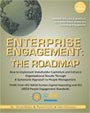
In this paper, one in a series for our Enterprise Engagement curriculum, we examine a critically important element of enterprise engagement – moving from strategy to execution. This paper is targeted at organizations that wish to move from talking about and planning enterprise engagement to implementing the initiatives at a tactical and measurable level – throughout the enterprise and for all key constituents. The main objective of this paper is to assist the reader through practical, clear and readily available techniques, practices and tools to implement enterprise engagement across the organization.
Published by:
This white paper from Meeting Professionals International looks at the steps to creating a strategic meetings management program and suggests a synthesized approach that invites colleagues into common, collaborative projects.
Published by: Meeting Professionals International
This white paper looks at the eight steps that meeting planners can take to create strategic meetings management programs in their organizations. In particular it looks at how meeting planners can collaborate with external suppliers to better meet internal objectives.
Published by: Meeting Professionals International
This white paper from Meeting Professionals International (MPI) describes how meeting professionals and corporate travel professionals can work together to achieve corporate stakeholder goals.
Published by: Meeting Professionals International
Provides a detailed outline for marketers of every aspect of the FTC regulations protecting consumers against telemarketing fraud.
Published by: Direct Marketing Association
This position paper from Meetiing Professionals International (MPI) examines a partnership business model, identifies critical ways in which meetings drive business, and looks at the key components and objectives of a thriving strategic meetings management program.
Published by: Meeting Professionals International
No doubt some people might dismiss Integrated Marketing as a passing fad, and who would view the burgeoning discipline of People Performance Management and Measurement (PPMM) as a buzz phrase or "flavor-of-the-month" marketing strategy.
Published by: Forum for People Performance Management and Measurement
This study, conducted by Prof. Frank Mulhern and Patricia Whalen of Northwestern University, identified a significant gap between the view of human resources and employees on the role of employees on delivering customer satisfaction, but found that companies with a close link between human resources and marketing outperform companies that don't.
Published by: Forum for People Performance Management and Measurement
With the increase of postal rates over the past several years and dwindling advertising and promotional budgets, many companies are tempted to reduce or eliminate investments into pre-show mailings with promotional products in tradeshow settings. Is this a wise choice? The results of a 2004 study by Georgia Southern University indicates the answer is NO.
Published by: Promotional Products Association International
This study analyzed attempts by a dozen diverse companies to integrate their external and internal marketing practices.
Published by: The Forum for People Performance Management and Measurement
This study analyzed attempts by a dozen diverse companies to integrate their external and internal marketing practices.
Published by: Northwestern University
Fred Parker, CEO of Bluegrass Promotional Marketing (UPIC: BLUEGRAS) in Charlotte, North Carolina is a football fan—especially since his company has been named the preferred promotional marketing agency for the Carolina Panthers for the 2006 season.
Published by: Promotional Consultant
The Heisman Trophy is college football’s most prestigious award, and DeAngelo Williams is the first University of Memphis football player to be within reach of this coveted trophy. With such a high-level honor at stake, Jennifer Rodrigues, athletics media relations director, knew she had to create a buzz about Williams that was as big as the player’s Heisman dream.
Published by: Promotional Consultant
Marketers need not rely on their salespeople to elicit new leads for business. Existing customers are a gold mine for getting referrals—when they are asked! Through direct mail offers of promotional product incentives, marketers can leverage customer satisfaction and secure more valuable referrals. These findings are from a 2005 customer "referencing" study done by an advertising faculty at Louisiana State University and Glenrich Business Studies. *
Published by: Promotional Products Association International
An experiment conducted by Georgia Southern University shows that recipients of promotional products have a significantly more positive image of a company than consumers who do not receive promotional products.
Published by: Promotional Products Association International
Once again we see statistically how well promotional products can help market business, thanks to a 2004 study by L.J. Market Research.
Published by: Promotional Products Association International
Many traditional forms of advertising and promotion are losing ground
to newer media. This trend presents opportunities for the promotional
products medium. However, very little research exists documenting the
effectiveness of promotional products when compared to and combined
with other traditional forms of advertising such as television and print.
Published by: Promotional Products Association International
Many traditional forms of advertising and promotion are losing ground to newer media. This trend presents opportunities for the promotional products medium. However, very little research exists documenting the effectiveness of promotional products when compared to and combined with other traditional forms of advertising such as television and print.
Published by: Promotional Products Association International
In the world of talent management, social networks have been used successfully in knowledge sharing, the identification of skills and construction of teams, in recruiting, onboarding and certainly learning. “Social Recognition,” which uses software to enable people to recognize one another, is a relatively new entrant in the pantheon of talent management technology. Yet it draws on practices from some of the world’s most popular internet applications. In connecting peers to peers, and in this case, employees to employees and employees to customers, partners, suppliers and others (the extended enterprise) it opens another dimension in recognition that has the potential to generate powerful cultural evolution within remarkably short timeframes. In others words, social recognition software can be transformative. It can fill a recognition gap quickly and it can extend recognition beyond the organization to help engage customers and other constituents.
Published by:
While it is widely believed that employee attitudes and engagement directly influence customer experiences and customer spending behavior, there is little empirical evidence that has explicitly demonstrated this. This study, subtitled "An Empirical Analysis of the Relationship between Employee Attitudes, Customer Attitudes, and Customer Spending," combines results from an extensive survey of employees and customers at a hotel chain with the actual spending patterns of customers. Results show a direct, measurable relationship between the employee and customer perceptions of the hotel brand and customer spending behavior.
Published by: Forum for People Performance Management and Measurement
The cost of employee disengagement to U.S. companies in terms of lost productivity, accidents, theft, and turnover is estimated to be as much as $350 billion per year. Disengaged workers are often absent (even when they are at work), disconnected, and often pessimistic about change and new ideas. They have high rates of absenteeism and tend to negatively influence those around them. Engaged workers, on the other hand, are significantly more productive, interact more positively with other employees and new hires, and are much more likely when they interact with customers to create relationships that generate loyalty and increased business. This white paper looks at the best measures available for building engagement among employees along with looking at the ROI for investing in those measures as a way for managers to demonstrate the economics of engagement to top executives.
Published by: Human Capital Institute
This study, conducted by Frank Mulhern on behalf of the Promotion Marketing Association with the support of the Forum, identified key challenges facing organizations attempting to fully integrate external and internal marketing.
Published by: The PMA/Northwestern University
This white paper highlights four key areas that impact organizational adoption of integrated marketing and motivate employees to think about and cooperate with integrated marketing efforts beyond their functional silos.
Published by: Forum for People Performance Management and Measurement
In the world of talent management, social networks have been used successfully in knowledge sharing, the identification of skills and construction of teams, in recruiting, onboarding and certainly learning. “Social Recognition,” which uses software to enable people to recognize one another, is a relatively new entrant in the pantheon of talent management technology. Yet it draws on practices from some of the world’s most popular internet applications. In connecting peers to peers, and in this case, employees to employees and employees to customers, partners, suppliers and others (the extended enterprise) it opens another dimension in recognition that has the potential to generate powerful cultural evolution within remarkably short timeframes. In others words, social recognition software can be transformative. It can fill a recognition gap quickly and it can extend recognition beyond the organization to help engage customers and other constituents.
Published by:
Sorry, no results matched your search.