Whitepapers
Sorry, no results matched your search.
A study designed to determine which aspects of selling respond to incentive travel and how that response can be measured. Researchers surveyed 1,800 subscribers of Meetings and Incentive Travel magazine and 3,000 members of the Canadian Automobile Dealers Association. To present an in-depth picture of incentive travel, and to provide a practical template for determining program ROI, the authors made a point of recording views of both the people who win the awards and those executives who allocate the money to fund them.
Published by: Incentive Research Foundation
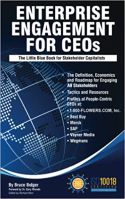
In many industries and businesses, channel partners are key links between employees and customers- a weak link if they are ignored, an important source of strength if they are engaged. The stakes are high. Channel partner impact can be enormous in terms of sales volume, market share, brand reputation and “share of customer”, i.e., in engaging customers. Indeed, channel partners are often the sole link to the customer. But channel partners can also impact employee engagement, especially when they fail to deliver. Conversely, channel partner engagement is directly affected by the employees who manage them and who produce the products and services. In short, most businesses succeed only to the degree that symbiotic relationships exist between employees, customers, channel partners and vendors. This is the basis upon which “Enterprise Engagement” is built. In this paper, we focus on channel partners as a key constituent of organizational success and we offer practical strategies and tactics to engage them.
Published by:
Reviews the economics and objectives of customer retention and argues that it’s easier and less costly to sell to existing customers than to new customers. The more customers you keep through active retention efforts, and the longer you keep them, the more profitable your company will be.
Published by: - Performance Improvement Council of the Incentive Marketing Association -
Just how effective are promotional products as giveaways at trade shows? A 2003 study by Georgia Southern University explores how promotional products impact recipient’s perceptions of the company, usefulness of the product and much more...
Published by: Promotional Products Association International
This study, by Prof. James Oakley of Ohio State University, found a clear link between employee engagement and customer satisfaction, and customer satisfaction and profitability.
Published by: The Forum for People Performance Management and Measurement
In 1999, the Incentive Federation requested that the Center for Concept Development conduct focus groups with incentive users in the New York, Los Angeles, Dallas, Chicago, and Atlanta areas.
Published by: Center for Concept Development
The Incentive Federation Inc. has commissioned a survey involving current users of merchandise and travel items for motivational applications. The Center for Concept Development (CCD) was asked to analyze the data collected in this survey and to prepare this report on the survey findings.
Published by: Center for Concept Development, Ltd.
The Incentive Federation Inc. has commissioned a survey involving current users of merchandise and travel items for motivational applications. The Center for Concept Development (CCD) was asked to analyze the data collected in this survey and to prepare this report on the survey findings.
Published by: Center for Concept Development, Ltd.
The Incentive Federation contracted with GfK, an international market research company, to develop and conduct a market sizing study of the U.S. marketplace for incentive travel and merchandise. Results showed that, overall, 34% of companies used either incentive travel or merchandise incentives in 2006, spending a total of $46.1 billion on incentive programs. Breaking down that total, the study finds that companies spent $13.4 billion on incentive travel and 32.7 billion on merchandise incentives. In addition, more than half of the study participants expect their future spending on incentive programs to increase.
Published by: Incentive Federation
Determining the right mix of compensation, benefits, training, and rewards & recognition
Published by: Performance Improvement Council
No doubt some people might dismiss Integrated Marketing as a passing fad, and who would view the burgeoning discipline of People Performance Management and Measurement (PPMM) as a buzz phrase or "flavor-of-the-month" marketing strategy.
Published by: Forum for People Performance Management and Measurement
This study, conducted by Prof. Frank Mulhern and Patricia Whalen of Northwestern University, identified a significant gap between the view of human resources and employees on the role of employees on delivering customer satisfaction, but found that companies with a close link between human resources and marketing outperform companies that don't.
Published by: Forum for People Performance Management and Measurement
Promotional products can increase traffic to an exhibitor’s trade show booth. A 1991 study by Exhibit Surveys Inc., found that using promotional products can give you an advantage over other exhibitors for buyer attention.
Published by: Promotional Products Association International
This paper explores the different types of consumer, dealer, and aftermarket incentives used in the automotive industry. It also looks at how advertising agencies view incentives. It examines traditional incentive strategies and concludes with advice on program implementation.
Published by: Design Incentives
A summary of research by the ISPI (International Society of Performance Improvement) on the impact of incentive programs and the essential implementation steps necessary for success. Shows how helpful incentive and motivation programs can be in terms of engaging employees and improving performance.
Published by: Incentive Research Foundation
With the increase of postal rates over the past several years and dwindling advertising and promotional budgets, many companies are tempted to reduce or eliminate investments into pre-show mailings with promotional products in tradeshow settings. Is this a wise choice? The results of a 2004 study by Georgia Southern University indicates the answer is NO.
Published by: Promotional Products Association International
This study analyzed attempts by a dozen diverse companies to integrate their external and internal marketing practices.
Published by: The Forum for People Performance Management and Measurement
This study analyzed attempts by a dozen diverse companies to integrate their external and internal marketing practices.
Published by: Northwestern University
Yvette Widdicombe, vice president of distributor Jack Nadel, Inc. (UPIC: NADELINC) in Palo Alto, California wanted to pamper her employees with a unique gift. After much thought, she decided on lounge pants with an accompanying spa bag and shirt.
Published by: Promotional Consultant
Manufacturers are sometimes cautious about the use of their brands in special markets. Obviously they want to maintain their brand integrity and avoid any impact consumer sales channels. This white paper from the Incentive Marketing Association (IMA), however, suggests that with basic safeguards in place, special markets like the incentive industry are “a win for the supplier, a win for the company, and a win for the employee.”
Published by: Incentive Marketing Association
This white paper delves into the mechanics of sales incentive programs, providing managers with useful information to design successful sales initiatives at their own companies and providing their corporate decision makers with hard evidence.
Published by: The Forum for People Performance Management and Measurement
Measurement is a key element in any performance improvement effort and particularly to the development of any incentive or recognition plan. The intent of this paper, published in October 2010, is twofold: First, it updates a performance measurement methodology originally published in 1992 called the “Master Measurement Model of Employee Performance”; second, it addresses how to measure the short and long-term impact and ROI of incentive and recognition plans. This paper is targeted primarily at professionals who design incentive and reward programs, whether they are organizational staff or external consultants, as well as for those that support and implement the programs, whether they conduct training, deliver the rewards and incentives themselves, or manage the programs.
Published by: Incentive Research Foundation
There’s a reason for the old adage: “You can’t manage what you don’t measure.” Anyone who has ever tried to run a business knows that’s true. But it is also true that you can’t manage what you measure only once each year.
When it comes to employee and customer engagement, most of us collect information through annual surveys, analyze the results, share them in a high-level report and perhaps devote part of an executive meeting to discuss the implications. Like performance reviews, this is usually done once a year – if at all.
Published by:
This report presents a series of cases involving companies that implemented sales incentive programs. It makes a case for the use of post-hoc or post-program measurement of ROI to demonstrate the impact of the programs on sales performance.
Published by: Incentive Research Foundation
A study on employee motivation and performance in the hospitality industry that looks at strategies for reducing employee turnover.
Published by: Incentive Research Foundation
Sorry, no results matched your search.