Whitepapers
Sorry, no results matched your search.
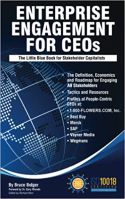
In this paper, one in a series for our Enterprise Engagement curriculum, we examine a critically important element of enterprise engagement – moving from strategy to execution. This paper is targeted at organizations that wish to move from talking about and planning enterprise engagement to implementing the initiatives at a tactical and measurable level – throughout the enterprise and for all key constituents. The main objective of this paper is to assist the reader through practical, clear and readily available techniques, practices and tools to implement enterprise engagement across the organization.
Published by:
Engagement Event Returns $2 for Every Dollar Spent <br/>
The Enterprise Engagement Alliance (EEA) recently announced that research measuring the return on investment (ROI) of an annual meeting of healthcare insurance brokers that stressed training, relationship-building and networking opportunities found the sponsoring company enjoyed a return of almost $2 for every $1 invested in the program. Initial results reported in March revealed that the program had a profound impact on the way brokers thought and felt about the company, its products and its people. Parts 1 and 2 of the study, The 'ROI in Channel Partner' Conferences – A Case Study, can be downloaded here.
Published by:
There’s amusement to be had for all at a carnival. There are spinning, flashing rides, whimsical music and, of course, icy snow cones. These things came to mind when Lynne DuVivier, president of Westport, Connecticut-based The Creative Factor, Inc. (UPIC: CREATEIT) was approached by HBO to develop a campaign for its show, Carnivàle.
Published by: Promotional Consultant
In many industries and businesses, channel partners are key links between employees and customers- a weak link if they are ignored, an important source of strength if they are engaged. The stakes are high. Channel partner impact can be enormous in terms of sales volume, market share, brand reputation and “share of customer”, i.e., in engaging customers. Indeed, channel partners are often the sole link to the customer. But channel partners can also impact employee engagement, especially when they fail to deliver. Conversely, channel partner engagement is directly affected by the employees who manage them and who produce the products and services. In short, most businesses succeed only to the degree that symbiotic relationships exist between employees, customers, channel partners and vendors. This is the basis upon which “Enterprise Engagement” is built. In this paper, we focus on channel partners as a key constituent of organizational success and we offer practical strategies and tactics to engage them.
Published by:
Provides a detailed outline for marketers of every aspect of the FTC regulations protecting consumers against telemarketing fraud.
Published by: Direct Marketing Association
This first in a series of three white papers on Customer Engagement from Rosetta Consulting is based on the findings of the 2014 Rosetta Consulting Engagement Study and focuses on how business leaders approach customer engagement. Researchers found clear
Published by:
Reviews the economics and objectives of customer retention and argues that it’s easier and less costly to sell to existing customers than to new customers. The more customers you keep through active retention efforts, and the longer you keep them, the more profitable your company will be.
Published by: - Performance Improvement Council of the Incentive Marketing Association -
Just how effective are promotional products as giveaways at trade shows? A 2003 study by Georgia Southern University explores how promotional products impact recipient’s perceptions of the company, usefulness of the product and much more...
Published by: Promotional Products Association International
This study, by Prof. James Oakley of Ohio State University, found a clear link between employee engagement and customer satisfaction, and customer satisfaction and profitability.
Published by: The Forum for People Performance Management and Measurement
The Incentive Federation Inc. has commissioned a survey involving current users of merchandise and travel items for motivational applications. The Center for Concept Development (CCD) was asked to analyze the data collected in this survey and to prepare this report on the survey findings.
Published by: Center for Concept Development, Ltd.
Promotional products can increase traffic to an exhibitor’s trade show booth. A 1991 study by Exhibit Surveys Inc., found that using promotional products can give you an advantage over other exhibitors for buyer attention.
Published by: Promotional Products Association International
This paper explores the different types of consumer, dealer, and aftermarket incentives used in the automotive industry. It also looks at how advertising agencies view incentives. It examines traditional incentive strategies and concludes with advice on program implementation.
Published by: Design Incentives
With the increase of postal rates over the past several years and dwindling advertising and promotional budgets, many companies are tempted to reduce or eliminate investments into pre-show mailings with promotional products in tradeshow settings. Is this a wise choice? The results of a 2004 study by Georgia Southern University indicates the answer is NO.
Published by: Promotional Products Association International
‘Repeat business or behavior can be bribed. Loyalty has to be earned’ - Janet Robinson
While Ms. Robinson may have been referring to brand loyalty or product loyalty as opposed to customer loyalty programs in the above quote, her words illustrate a very important concept. Incentive programs don’t start with built-in loyalty and customer buy-in. Without question, incentive programs need to generate loyalty – not only from senior management, but also from the customers they’re trying to entice. An effective program will excel for both management and customers when it is built with a foundation that provides a clear vision for success. In fact, many established programs have been assembled using five critical building blocks that inspire brand loyalty among customers.
Published by:
This study analyzed attempts by a dozen diverse companies to integrate their external and internal marketing practices.
Published by: The Forum for People Performance Management and Measurement
Manufacturers are sometimes cautious about the use of their brands in special markets. Obviously they want to maintain their brand integrity and avoid any impact consumer sales channels. This white paper from the Incentive Marketing Association (IMA), however, suggests that with basic safeguards in place, special markets like the incentive industry are “a win for the supplier, a win for the company, and a win for the employee.”
Published by: Incentive Marketing Association
Results from the study Awards Selection: Insights from Managers, conducted by the Forum for People Performance Management and Measurement, sheds light on the efficacy of 12 distinct motivational tactics used by HR and marketing managers across many industries to achieve 10 specific organizational objectives.
Published by: Forum for People Performance Management and Measurement
There’s a reason for the old adage: “You can’t manage what you don’t measure.” Anyone who has ever tried to run a business knows that’s true. But it is also true that you can’t manage what you measure only once each year.
When it comes to employee and customer engagement, most of us collect information through annual surveys, analyze the results, share them in a high-level report and perhaps devote part of an executive meeting to discuss the implications. Like performance reviews, this is usually done once a year – if at all.
Published by:
Fred Parker, CEO of Bluegrass Promotional Marketing (UPIC: BLUEGRAS) in Charlotte, North Carolina is a football fan—especially since his company has been named the preferred promotional marketing agency for the Carolina Panthers for the 2006 season.
Published by: Promotional Consultant
Federal legislators in 2002 enacted the Sarbanes-Oxley Act (SOX), which was designed to improve the accountability of corporate managers to shareholders and to improve public confidence in publicly traded companies. This white paper is an outline of the potential impact of SOX on the use of performance improvement and incentive programs.
Published by: Performance Improvement Council of the Incentive Marketing Association
This white paper discusses the range of "zero-based performance improvement strategies" that can be developed with the help of full-service incentive and performance improvement companies. It also includes contact information on members of the Incentive Marketing Association's Performance Improvement Council, made up of a dozen organizations dedicated to offering companies solutions-based incentive and performance improvement programs.
Published by: Performance Improvement Council of the Incentive Marketing Association
Marketers need not rely on their salespeople to elicit new leads for business. Existing customers are a gold mine for getting referrals—when they are asked! Through direct mail offers of promotional product incentives, marketers can leverage customer satisfaction and secure more valuable referrals. These findings are from a 2005 customer "referencing" study done by an advertising faculty at Louisiana State University and Glenrich Business Studies. *
Published by: Promotional Products Association International
An experiment conducted by Georgia Southern University shows that recipients of promotional products have a significantly more positive image of a company than consumers who do not receive promotional products.
Published by: Promotional Products Association International
Once again we see statistically how well promotional products can help market business, thanks to a 2004 study by L.J. Market Research.
Published by: Promotional Products Association International
Many traditional forms of advertising and promotion are losing ground
to newer media. This trend presents opportunities for the promotional
products medium. However, very little research exists documenting the
effectiveness of promotional products when compared to and combined
with other traditional forms of advertising such as television and print.
Published by: Promotional Products Association International
Sorry, no results matched your search.