Your portal to
enterprise engagement

Books

Resources for Books - Surveys-polls-assessmentsclear search
Sorry, no results matched your search.


Save Link

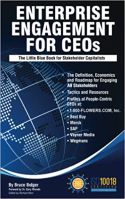
Enterprise Engagement: The Roadmap, 3rd Edition

Enterprise Engagement: The Roadmap, 3rd Edition has been completely updated with new information, illustrations and new chapters. Authored and edited by dozens of experts in general management, marketing, sales, data management, business and academia, the Textbook’s methodology has been endorsed by leading companies as a means of achieving both strategic and tactical organizational goals related to sales, marketing, human resources, vendor management, and community relations. A proven strategy to:
  • Increase long-term profitability
  • Maximize customer loyalty and referrals
  • Capture the commitment of dealers, agents and distributors
  • Increase sales and improve customer service
  • Maximize quality, productivity, quality and wellness
  • Foster greater prosperity through a focus on people 
 
Enterprise Engagement: The Roadmap, 3rd Edition also provides formal preparation for the Enterprise Engagement Certification program. To order a copy, click here.

Bruce Bolger, Allan Schweyer & Richard Kern . 242 pp. Cost: $36

Save Link

Enterprise Engagement: The Roadmap, 3rd Edition

Enterprise Engagement: The Roadmap, 3rd Edition has been completely updated with new information, illustrations and new chapters. Authored and edited by dozens of experts in general management, marketing, sales, data management, business and academia, the Textbook’s methodology has been endorsed by leading companies as a means of achieving both strategic and tactical organizational goals related to sales, marketing, human resources, vendor management, and community relations. A proven strategy to:
  • Increase long-term profitability
  • Maximize customer loyalty and referrals
  • Capture the commitment of dealers, agents and distributors
  • Increase sales and improve customer service
  • Maximize quality, productivity, quality and wellness
  • Foster greater prosperity through a focus on people 
 
Enterprise Engagement: The Roadmap, 3rd Edition also provides formal preparation for the Enterprise Engagement Certification program. To order a copy, click here.

Bruce Bolger, Allan Schweyer & Richard Kern . 242 pp. Cost: $36

Save Link

Enterprise Engagement: The Roadmap, 3rd Edition

Enterprise Engagement: The Roadmap, 3rd Edition has been completely updated with new information, illustrations and new chapters. Authored and edited by dozens of experts in general management, marketing, sales, data management, business and academia, the Textbook’s methodology has been endorsed by leading companies as a means of achieving both strategic and tactical organizational goals related to sales, marketing, human resources, vendor management, and community relations. A proven strategy to:
  • Increase long-term profitability
  • Maximize customer loyalty and referrals
  • Capture the commitment of dealers, agents and distributors
  • Increase sales and improve customer service
  • Maximize quality, productivity, quality and wellness
  • Foster greater prosperity through a focus on people 
 
Enterprise Engagement: The Roadmap, 3rd Edition also provides formal preparation for the Enterprise Engagement Certification program. To order a copy, click here.

Bruce Bolger, Allan Schweyer & Richard Kern . 242 pp. Cost: $36

Save Link

Enterprise Engagement: The Roadmap, 3rd Edition

Enterprise Engagement: The Roadmap, 3rd Edition has been completely updated with new information, illustrations and new chapters. Authored and edited by dozens of experts in general management, marketing, sales, data management, business and academia, the Textbook’s methodology has been endorsed by leading companies as a means of achieving both strategic and tactical organizational goals related to sales, marketing, human resources, vendor management, and community relations. A proven strategy to:
  • Increase long-term profitability
  • Maximize customer loyalty and referrals
  • Capture the commitment of dealers, agents and distributors
  • Increase sales and improve customer service
  • Maximize quality, productivity, quality and wellness
  • Foster greater prosperity through a focus on people 
 
Enterprise Engagement: The Roadmap, 3rd Edition also provides formal preparation for the Enterprise Engagement Certification program. To order a copy, click here.

Bruce Bolger, Allan Schweyer & Richard Kern . 242 pp. Cost: $36

Save Link

Enterprise Engagement: The Roadmap, 3rd Edition

Enterprise Engagement: The Roadmap, 3rd Edition has been completely updated with new information, illustrations and new chapters. Authored and edited by dozens of experts in general management, marketing, sales, data management, business and academia, the Textbook’s methodology has been endorsed by leading companies as a means of achieving both strategic and tactical organizational goals related to sales, marketing, human resources, vendor management, and community relations. A proven strategy to:
  • Increase long-term profitability
  • Maximize customer loyalty and referrals
  • Capture the commitment of dealers, agents and distributors
  • Increase sales and improve customer service
  • Maximize quality, productivity, quality and wellness
  • Foster greater prosperity through a focus on people 
 
Enterprise Engagement: The Roadmap, 3rd Edition also provides formal preparation for the Enterprise Engagement Certification program. To order a copy, click here.

Bruce Bolger, Allan Schweyer & Richard Kern . 242 pp. Cost: $36

Save Link

Enterprise Engagement: The Roadmap, 3rd Edition

Enterprise Engagement: The Roadmap, 3rd Edition has been completely updated with new information, illustrations and new chapters. Authored and edited by dozens of experts in general management, marketing, sales, data management, business and academia, the Textbook’s methodology has been endorsed by leading companies as a means of achieving both strategic and tactical organizational goals related to sales, marketing, human resources, vendor management, and community relations. A proven strategy to:
  • Increase long-term profitability
  • Maximize customer loyalty and referrals
  • Capture the commitment of dealers, agents and distributors
  • Increase sales and improve customer service
  • Maximize quality, productivity, quality and wellness
  • Foster greater prosperity through a focus on people 
 
Enterprise Engagement: The Roadmap, 3rd Edition also provides formal preparation for the Enterprise Engagement Certification program. To order a copy, click here.

Bruce Bolger, Allan Schweyer & Richard Kern . 242 pp. Cost: $36

Save Link

Enterprise Engagement: The Roadmap, 3rd Edition

Enterprise Engagement: The Roadmap, 3rd Edition has been completely updated with new information, illustrations and new chapters. Authored and edited by dozens of experts in general management, marketing, sales, data management, business and academia, the Textbook’s methodology has been endorsed by leading companies as a means of achieving both strategic and tactical organizational goals related to sales, marketing, human resources, vendor management, and community relations. A proven strategy to:
  • Increase long-term profitability
  • Maximize customer loyalty and referrals
  • Capture the commitment of dealers, agents and distributors
  • Increase sales and improve customer service
  • Maximize quality, productivity, quality and wellness
  • Foster greater prosperity through a focus on people 
 
Enterprise Engagement: The Roadmap, 3rd Edition also provides formal preparation for the Enterprise Engagement Certification program. To order a copy, click here.

Bruce Bolger, Allan Schweyer & Richard Kern . 242 pp. Cost: $36

Save Link

Enterprise Engagement: The Roadmap, 3rd Edition

Enterprise Engagement: The Roadmap, 3rd Edition has been completely updated with new information, illustrations and new chapters. Authored and edited by dozens of experts in general management, marketing, sales, data management, business and academia, the Textbook’s methodology has been endorsed by leading companies as a means of achieving both strategic and tactical organizational goals related to sales, marketing, human resources, vendor management, and community relations. A proven strategy to:
  • Increase long-term profitability
  • Maximize customer loyalty and referrals
  • Capture the commitment of dealers, agents and distributors
  • Increase sales and improve customer service
  • Maximize quality, productivity, quality and wellness
  • Foster greater prosperity through a focus on people 
 
Enterprise Engagement: The Roadmap, 3rd Edition also provides formal preparation for the Enterprise Engagement Certification program. To order a copy, click here.

Bruce Bolger, Allan Schweyer & Richard Kern . 242 pp. Cost: $36

Save Link

Enterprise Engagement: The Roadmap, 3rd Edition

Enterprise Engagement: The Roadmap, 3rd Edition has been completely updated with new information, illustrations and new chapters. Authored and edited by dozens of experts in general management, marketing, sales, data management, business and academia, the Textbook’s methodology has been endorsed by leading companies as a means of achieving both strategic and tactical organizational goals related to sales, marketing, human resources, vendor management, and community relations. A proven strategy to:
  • Increase long-term profitability
  • Maximize customer loyalty and referrals
  • Capture the commitment of dealers, agents and distributors
  • Increase sales and improve customer service
  • Maximize quality, productivity, quality and wellness
  • Foster greater prosperity through a focus on people 
 
Enterprise Engagement: The Roadmap, 3rd Edition also provides formal preparation for the Enterprise Engagement Certification program. To order a copy, click here.

Bruce Bolger, Allan Schweyer & Richard Kern . 242 pp. Cost: $36

Save Link

Horsepower System Aims to Bring Engagement Surveys and Good Leadership to the Masses

Horsepower System founder Paul Herr believes his company addresses an often overlooked niche in the leadership and assessment space: the large number of companies that need an affordable, scientific means of assessing engagement in an ongoing way that can be translated into effective solutions. 
 
The Horsepower System is sold directly to organizations of almost any size, Herr says, as well as to consultants and technology providers seeking to integrate effective leadership assessment and coaching into their platforms.
 
According to Herr (pronounced hair), “This tool not only measures employee engagement on a regular basis, it provides leadership insights through Tune-Up TipsTM for getting the score to go up.” The performance-management tool is based on Herr’s book, “Primal Management: Unraveling the Secrets of Human Nature to Drive High Performance,” which was published by the American Management Association in 2009. The book is available on Amazon.com. A condensed white paper is available here.  
 
As explained in company literature, The Horsepower System is an online performance-management tool that is designed to help corporations worldwide:
 
1.       Tap into the passion, energy and creativity of their people
2.       Improve leadership skills
3.       Boost employee-engagement and productivity
4.       Detect people-issues before they grow into people-problems
5.       Become a "best-place-to-work" in their communities
6.       Create an employer brand that attracts and retains top talent.


Using only seven questions, making it possible to distribute monthly, The Horsepower Survey, Herr says, is the first survey based on “neuro-economic principles.” It benchmarks changes in engagement throughout the organization and, if set up properly, can pinpoint groups and managers where engagement is lagging behind other groups. Because the same questions are used for all companies, the platform can provide useful benchmarking comparisons. 
 
“Most Fortune 1,000 companies measure employee engagement annually using lengthy, expensive and time-consuming surveys," Herr says.  "These surveys produce thick, complicated reports that often languish, unread, on managers' bookshelves. The Horsepower System provides a simple, practical, intuitive and affordable alternative to the complicated surveys offered by the big consulting firms, along with ways to translate the findings into direct action.”
 
 
Herr explains that The Horsepower System "turns employee engagement from a once-a-year afterthought (once-a-year survey) into an ongoing business priority by tracking employee motivation monthly or quarterly throughout the year with a short, online survey. We think employee engagement is simply too important to monitor only once a year.”
 
He says that his company’s platform also draws from research by Harvard Professors Nitin Nohria, Boris Groysberg and Linda-Eling Lee entitled “Employee Motivation: A Powerful New Model," published in the Harvard Business Review in 2008. The authors identified four drivers underlying motivation that organizations can address:
 
1. The drive to acquire scarce goods that bolster one’s sense of well-being. 
2. The drive to bond which, when met, is associated with strong positive emotions such as love and caring.
3. The drive to comprehend; that is, make sense of the world, produce theories and accounts— scientific, religious, and cultural—that make events understandable and suggest reasonable actions and responses. 
4. The drive to defend ourselves, our property and accomplishments, our family and friends, and our ideas and beliefs against external threats. 
 
Herr says that if organizations can address these fundamental concerns on an ongoing basis by pinpointing and addressing problems, they can go a long way toward creating a climate in which engagement gets translated into positive action and results.

For more information
Contact Paul Herr
608-576-7616
peherr@paulherrconsulting.com
 
The Horsepower System will be on display at the Engagement University & Expo, on the afternoon of Wed., April 19, at the Fairmont Chicago Millennium Park. 

Save Link

Enterprise Engagement: The Roadmap, 3rd Edition

Enterprise Engagement: The Roadmap, 3rd Edition has been completely updated with new information, illustrations and new chapters. Authored and edited by dozens of experts in general management, marketing, sales, data management, business and academia, the Textbook’s methodology has been endorsed by leading companies as a means of achieving both strategic and tactical organizational goals related to sales, marketing, human resources, vendor management, and community relations. A proven strategy to:
  • Increase long-term profitability
  • Maximize customer loyalty and referrals
  • Capture the commitment of dealers, agents and distributors
  • Increase sales and improve customer service
  • Maximize quality, productivity, quality and wellness
  • Foster greater prosperity through a focus on people 
 
Enterprise Engagement: The Roadmap, 3rd Edition also provides formal preparation for the Enterprise Engagement Certification program. To order a copy, click here.

Bruce Bolger, Allan Schweyer & Richard Kern . 242 pp. Cost: $36

Save Link

Enterprise Engagement: The Roadmap, 3rd Edition

Enterprise Engagement: The Roadmap, 3rd Edition has been completely updated with new information, illustrations and new chapters. Authored and edited by dozens of experts in general management, marketing, sales, data management, business and academia, the Textbook’s methodology has been endorsed by leading companies as a means of achieving both strategic and tactical organizational goals related to sales, marketing, human resources, vendor management, and community relations. A proven strategy to:
  • Increase long-term profitability
  • Maximize customer loyalty and referrals
  • Capture the commitment of dealers, agents and distributors
  • Increase sales and improve customer service
  • Maximize quality, productivity, quality and wellness
  • Foster greater prosperity through a focus on people 
 
Enterprise Engagement: The Roadmap, 3rd Edition also provides formal preparation for the Enterprise Engagement Certification program. To order a copy, click here.

Bruce Bolger, Allan Schweyer & Richard Kern . 242 pp. Cost: $36

Save Link

Horsepower System Aims to Bring Engagement Surveys and Good Leadership to the Masses

Horsepower System founder Paul Herr believes his company addresses an often overlooked niche in the leadership and assessment space: the large number of companies that need an affordable, scientific means of assessing engagement in an ongoing way that can be translated into effective solutions. 
 
The Horsepower System is sold directly to organizations of almost any size, Herr says, as well as to consultants and technology providers seeking to integrate effective leadership assessment and coaching into their platforms.
 
According to Herr (pronounced hair), “This tool not only measures employee engagement on a regular basis, it provides leadership insights through Tune-Up TipsTM for getting the score to go up.” The performance-management tool is based on Herr’s book, “Primal Management: Unraveling the Secrets of Human Nature to Drive High Performance,” which was published by the American Management Association in 2009. The book is available on Amazon.com. A condensed white paper is available here.  
 
As explained in company literature, The Horsepower System is an online performance-management tool that is designed to help corporations worldwide:
 
1.       Tap into the passion, energy and creativity of their people
2.       Improve leadership skills
3.       Boost employee-engagement and productivity
4.       Detect people-issues before they grow into people-problems
5.       Become a "best-place-to-work" in their communities
6.       Create an employer brand that attracts and retains top talent.


Using only seven questions, making it possible to distribute monthly, The Horsepower Survey, Herr says, is the first survey based on “neuro-economic principles.” It benchmarks changes in engagement throughout the organization and, if set up properly, can pinpoint groups and managers where engagement is lagging behind other groups. Because the same questions are used for all companies, the platform can provide useful benchmarking comparisons. 
 
“Most Fortune 1,000 companies measure employee engagement annually using lengthy, expensive and time-consuming surveys," Herr says.  "These surveys produce thick, complicated reports that often languish, unread, on managers' bookshelves. The Horsepower System provides a simple, practical, intuitive and affordable alternative to the complicated surveys offered by the big consulting firms, along with ways to translate the findings into direct action.”
 
 
Herr explains that The Horsepower System "turns employee engagement from a once-a-year afterthought (once-a-year survey) into an ongoing business priority by tracking employee motivation monthly or quarterly throughout the year with a short, online survey. We think employee engagement is simply too important to monitor only once a year.”
 
He says that his company’s platform also draws from research by Harvard Professors Nitin Nohria, Boris Groysberg and Linda-Eling Lee entitled “Employee Motivation: A Powerful New Model," published in the Harvard Business Review in 2008. The authors identified four drivers underlying motivation that organizations can address:
 
1. The drive to acquire scarce goods that bolster one’s sense of well-being. 
2. The drive to bond which, when met, is associated with strong positive emotions such as love and caring.
3. The drive to comprehend; that is, make sense of the world, produce theories and accounts— scientific, religious, and cultural—that make events understandable and suggest reasonable actions and responses. 
4. The drive to defend ourselves, our property and accomplishments, our family and friends, and our ideas and beliefs against external threats. 
 
Herr says that if organizations can address these fundamental concerns on an ongoing basis by pinpointing and addressing problems, they can go a long way toward creating a climate in which engagement gets translated into positive action and results.

For more information
Contact Paul Herr
608-576-7616
peherr@paulherrconsulting.com
 
The Horsepower System will be on display at the Engagement University & Expo, on the afternoon of Wed., April 19, at the Fairmont Chicago Millennium Park. 

Save Link

Enterprise Engagement: The Roadmap, 3rd Edition

Enterprise Engagement: The Roadmap, 3rd Edition has been completely updated with new information, illustrations and new chapters. Authored and edited by dozens of experts in general management, marketing, sales, data management, business and academia, the Textbook’s methodology has been endorsed by leading companies as a means of achieving both strategic and tactical organizational goals related to sales, marketing, human resources, vendor management, and community relations. A proven strategy to:
  • Increase long-term profitability
  • Maximize customer loyalty and referrals
  • Capture the commitment of dealers, agents and distributors
  • Increase sales and improve customer service
  • Maximize quality, productivity, quality and wellness
  • Foster greater prosperity through a focus on people 
 
Enterprise Engagement: The Roadmap, 3rd Edition also provides formal preparation for the Enterprise Engagement Certification program. To order a copy, click here.

Bruce Bolger, Allan Schweyer & Richard Kern . 242 pp. Cost: $36

Save Link

Enterprise Engagement: The Roadmap, 3rd Edition

Enterprise Engagement: The Roadmap, 3rd Edition has been completely updated with new information, illustrations and new chapters. Authored and edited by dozens of experts in general management, marketing, sales, data management, business and academia, the Textbook’s methodology has been endorsed by leading companies as a means of achieving both strategic and tactical organizational goals related to sales, marketing, human resources, vendor management, and community relations. A proven strategy to:
  • Increase long-term profitability
  • Maximize customer loyalty and referrals
  • Capture the commitment of dealers, agents and distributors
  • Increase sales and improve customer service
  • Maximize quality, productivity, quality and wellness
  • Foster greater prosperity through a focus on people 
 
Enterprise Engagement: The Roadmap, 3rd Edition also provides formal preparation for the Enterprise Engagement Certification program. To order a copy, click here.

Bruce Bolger, Allan Schweyer & Richard Kern . 242 pp. Cost: $36

Save Link

Unlocking Big Data for Smarter Conversations

In this excerpt from his new book, ‘Laddering: Unlocking the Potential of Consumer Behavior,’ PossibleNOW VP Eric Holtzclaw explains how techniques such as laddering, lensing and latticing can radically and permanently change the way you view your products, services, customers and marketing message

By Eric Holtzclaw

In today’s many-to-many world, users group themselves largely based on values, interests and aspirations, not according to traditional segmentations like sex, race and age. You must understand these consumers at their core – that is, what drives them and how they act (and want to act) within certain contexts.

The big secret is that the core of a consumer rarely changes; it takes a life event, not a life stage, to dramatically affect the consumer’s basic drivers. Companies that expend the time and effort to truly understand this core instead of guessing or assuming are the ones that win. Once you understand the core, you view every product, marketing, or experience decision from the point of view of the constant: the consumer’s DNA.

Today’s connected consumers demand more from companies than a reliance on demographics, segmentation, or other big data will reveal. They have very specific expectations of brands to provide them with a product, service or experience. The recent dramatic disruptions in the buyer journey mean that companies can no longer rely on previously proven models of reaching their consumer audience or expect these consumers to follow the traditional path from identifying a need to making a purchase.

The purpose of this book is to discuss the patterns of consumer behavior that are truly important – what I call consumer DNA – and to understand how to capitalize on it to deliver successful products, services, experiences and marketing messages.

Not Just The Numbers

It doesn’t matter how much big data companies collect on their customers. Collecting numbers is a desperate attempt to return to times gone by – a time when the mere collection of data and comparison of data to data led to a revelation that magically presented itself. This simply doesn’t happen any more without a deeper understanding of the consumer. It’s very likely that a company will determine a false positive or miss out on additional opportunity by making assumptions based only on data they’re collecting. 

Companies that fail to use a lens or key of consumer behavior to go beyond what big data alone indicates as a pattern will continue to build products and messages that miss the mark. Big data only tells you what; it’s not until you know why that you’re in the much stronger position of knowing what truly matters and what to do about it. Your consumer understanding needs to extend beyond preferences in color, previous buying behaviors and brand affinity for the sake of brand.

As an example, many of our studies uncover consumer clusters that prefer to receive company-branded content, because they trust the company to provide the information. On the other hand, there will be clusters that prefer to resolve an issue or learn about new things by finding content provided from third parties. For some clusters, a third party could be an expert – Consumer Reports or a movie critic, for example. For others, it’s another person “like” them; not a company representative or a so-called expert, but someone that they relate to and trust.

When we run tests with the same exact content, but brand one to the company and have a third party provide the other, the content tests more or less favorably depending on the group that we’re querying. This means that marketing needs to distribute their content in many different ways – whether it’s via the organization’s traditional channels and/or through third-party resources that have the opportunity to tell the story. The company needs to support the clusters’ core desire and allow them to share the information the way they wish.

This is equally important for providing support to your consumers. A consumer who doesn’t trust the company entirely will spend time on third-party sites trying to resolve their issue before reaching out to a support channel. Meanwhile, a more trusting consumer may spend substantial time on company-sponsored properties trying to find the answer on their own.

If the company providing support to the end consumer can identify these consumer patterns in their big data, then they immediately know how to speak to the end consumer in a way that fits their core behavior or desire. But if a brand fails to consider this possibility, they run the risk of making assumptions about the consumer and infuriating them during the support process, despite the company’s best attempts in trying to resolve the problem. The company may end up recommending content that a consumer cluster will immediately discount and ignore because of the source.

Parsing Patterns

Foursquare is a location-based social networking application first introduced in 2009 that allows users to “check-in” to various places they visit using a mobile website. The brand’s creators discussed some patterns they noticed early on in a recent Inc. magazine interview. When they viewed the initial “big data” that their system generated, they noticed that many of the users saw a use for the application not as they had intended – for checking into locations and collecting badges – but rather as a great way to get reviews and recommendations for locations around them. So instead of fighting this cluster's natural behavior, the creators embraced and celebrated it. After all, people were using their product; did it matter that it wasn’t in the way they had initially envisioned?

Foursquare is one of my favorite examples of an application that has embraced the fact that different consumers use the application for different reasons. In addition to their flexible approach to supporting consumers’ preferences, they also know how to use a single application to message and provide functionality that hits four core consumer behaviors: the desire to 1) become the “mayor” of a given location, an honor you receive from having checked-in to a location more than anyone else; 2) receive unexpected rewards or discounts; 3) find out what other people might be at places near you; and 4) discover new and interesting places around your current location.

More Is Less

Many companies are following a somewhat disingenuous trend by trying to become more to the consumer than they really are in an effort to collect more big data on their consumer clusters. For instance, they attempt to become a destination spot for their consumers for shopping and for information or services that are outside of their primary business focus. But these initiatives’ ultimate goal isn’t to know their customers better; it’s to sell the information they gain to other companies or data aggregators.

Trying to be more to a consumer than they need or want you to be is a tricky balance to strike. More often than not, your customers will quickly recognize this inauthentic attempt and thwart your efforts. One example of this is Facebook’s attempt at building stores into its platform. We found in our studies that very few consumer clusters would consider shopping at a “Facebook store.” Additionally, the clusters that would shop there are not the ones most brands are attempting to target, nor do they have the influence to drive other clusters to this type of adoption.

Following laddering techniques will put your company in a stronger position moving forward in the big data conversation. By taking the time to truly understand your consumer clusters, their desires or needs and the elements that comprise their core DNA, you can better predict how to support them as technology and the marketplace grows and shifts.

Glossary

Clusters: Distinct consumer groups that map to one another because of their core DNA or behavior. It’s crucial to understand the influence of a cluster – do others listen and care when this group says something? Also, the ecosystem of the cluster – to whom are they naturally attached, and where do they get their information?

Laddering: Thomas Reynolds and Jonathan Gutman developed and introduced laddering in 1988, based on Gutman’s Means-End Theory of 1982. Their approach states that product attributes lead to consequences that generate personal meaning (values) for users. In other words, they worked from the starting point of features to determine which functional and emotional benefits resonate with the consumer – a process much like climbing a ladder.

Latticing: If you have conducted your laddering work broadly, in the proper context and with the right person, you can explain with finite detail how specific clusters relate to each other. This process is called “latticing” the user groups. Understanding this relationship can help you to both target consumers and create additional reach for the products, services or experiences you’re creating. You can use the lattice to unlock your big data and make it actionable and useful beyond just being a collection of information on different groups.

Lensing: Lensing is one of the most powerful aspects of laddering, because it puts your team in your consumers’ shoes. Analyzing how people from the outside world truly perceive your brand gives you an idea of the attributes that are most important to mapping your clusters. For the lensing process to work properly, you may need to break down some internal barriers that prevent knowledge from being shared across the entire organization. Lensing will result in actionable and measurable initiatives for your team to help the company move forward.

[ return to top ]

Save Link

Enterprise Engagement: The Roadmap, 3rd Edition

Enterprise Engagement: The Roadmap, 3rd Edition has been completely updated with new information, illustrations and new chapters. Authored and edited by dozens of experts in general management, marketing, sales, data management, business and academia, the Textbook’s methodology has been endorsed by leading companies as a means of achieving both strategic and tactical organizational goals related to sales, marketing, human resources, vendor management, and community relations. A proven strategy to:
  • Increase long-term profitability
  • Maximize customer loyalty and referrals
  • Capture the commitment of dealers, agents and distributors
  • Increase sales and improve customer service
  • Maximize quality, productivity, quality and wellness
  • Foster greater prosperity through a focus on people 
 
Enterprise Engagement: The Roadmap, 3rd Edition also provides formal preparation for the Enterprise Engagement Certification program. To order a copy, click here.

Bruce Bolger, Allan Schweyer & Richard Kern . 242 pp. Cost: $36

Save Link

Enterprise Engagement: The Roadmap, 3rd Edition

Enterprise Engagement: The Roadmap, 3rd Edition has been completely updated with new information, illustrations and new chapters. Authored and edited by dozens of experts in general management, marketing, sales, data management, business and academia, the Textbook’s methodology has been endorsed by leading companies as a means of achieving both strategic and tactical organizational goals related to sales, marketing, human resources, vendor management, and community relations. A proven strategy to:
  • Increase long-term profitability
  • Maximize customer loyalty and referrals
  • Capture the commitment of dealers, agents and distributors
  • Increase sales and improve customer service
  • Maximize quality, productivity, quality and wellness
  • Foster greater prosperity through a focus on people 
 
Enterprise Engagement: The Roadmap, 3rd Edition also provides formal preparation for the Enterprise Engagement Certification program. To order a copy, click here.

Bruce Bolger, Allan Schweyer & Richard Kern . 242 pp. Cost: $36

Save Link

Enterprise Engagement: The Roadmap, 3rd Edition

Enterprise Engagement: The Roadmap, 3rd Edition has been completely updated with new information, illustrations and new chapters. Authored and edited by dozens of experts in general management, marketing, sales, data management, business and academia, the Textbook’s methodology has been endorsed by leading companies as a means of achieving both strategic and tactical organizational goals related to sales, marketing, human resources, vendor management, and community relations. A proven strategy to:
  • Increase long-term profitability
  • Maximize customer loyalty and referrals
  • Capture the commitment of dealers, agents and distributors
  • Increase sales and improve customer service
  • Maximize quality, productivity, quality and wellness
  • Foster greater prosperity through a focus on people 
 
Enterprise Engagement: The Roadmap, 3rd Edition also provides formal preparation for the Enterprise Engagement Certification program. To order a copy, click here.

Bruce Bolger, Allan Schweyer & Richard Kern . 242 pp. Cost: $36

Save Link

Enterprise Engagement: The Roadmap, 3rd Edition

Enterprise Engagement: The Roadmap, 3rd Edition has been completely updated with new information, illustrations and new chapters. Authored and edited by dozens of experts in general management, marketing, sales, data management, business and academia, the Textbook’s methodology has been endorsed by leading companies as a means of achieving both strategic and tactical organizational goals related to sales, marketing, human resources, vendor management, and community relations. A proven strategy to:
  • Increase long-term profitability
  • Maximize customer loyalty and referrals
  • Capture the commitment of dealers, agents and distributors
  • Increase sales and improve customer service
  • Maximize quality, productivity, quality and wellness
  • Foster greater prosperity through a focus on people 
 
Enterprise Engagement: The Roadmap, 3rd Edition also provides formal preparation for the Enterprise Engagement Certification program. To order a copy, click here.

Bruce Bolger, Allan Schweyer & Richard Kern . 242 pp. Cost: $36

Save Link

Horsepower System Aims to Bring Engagement Surveys and Good Leadership to the Masses

Horsepower System founder Paul Herr believes his company addresses an often overlooked niche in the leadership and assessment space: the large number of companies that need an affordable, scientific means of assessing engagement in an ongoing way that can be translated into effective solutions. 
 
The Horsepower System is sold directly to organizations of almost any size, Herr says, as well as to consultants and technology providers seeking to integrate effective leadership assessment and coaching into their platforms.
 
According to Herr (pronounced hair), “This tool not only measures employee engagement on a regular basis, it provides leadership insights through Tune-Up TipsTM for getting the score to go up.” The performance-management tool is based on Herr’s book, “Primal Management: Unraveling the Secrets of Human Nature to Drive High Performance,” which was published by the American Management Association in 2009. The book is available on Amazon.com. A condensed white paper is available here.  
 
As explained in company literature, The Horsepower System is an online performance-management tool that is designed to help corporations worldwide:
 
1.       Tap into the passion, energy and creativity of their people
2.       Improve leadership skills
3.       Boost employee-engagement and productivity
4.       Detect people-issues before they grow into people-problems
5.       Become a "best-place-to-work" in their communities
6.       Create an employer brand that attracts and retains top talent.


Using only seven questions, making it possible to distribute monthly, The Horsepower Survey, Herr says, is the first survey based on “neuro-economic principles.” It benchmarks changes in engagement throughout the organization and, if set up properly, can pinpoint groups and managers where engagement is lagging behind other groups. Because the same questions are used for all companies, the platform can provide useful benchmarking comparisons. 
 
“Most Fortune 1,000 companies measure employee engagement annually using lengthy, expensive and time-consuming surveys," Herr says.  "These surveys produce thick, complicated reports that often languish, unread, on managers' bookshelves. The Horsepower System provides a simple, practical, intuitive and affordable alternative to the complicated surveys offered by the big consulting firms, along with ways to translate the findings into direct action.”
 
 
Herr explains that The Horsepower System "turns employee engagement from a once-a-year afterthought (once-a-year survey) into an ongoing business priority by tracking employee motivation monthly or quarterly throughout the year with a short, online survey. We think employee engagement is simply too important to monitor only once a year.”
 
He says that his company’s platform also draws from research by Harvard Professors Nitin Nohria, Boris Groysberg and Linda-Eling Lee entitled “Employee Motivation: A Powerful New Model," published in the Harvard Business Review in 2008. The authors identified four drivers underlying motivation that organizations can address:
 
1. The drive to acquire scarce goods that bolster one’s sense of well-being. 
2. The drive to bond which, when met, is associated with strong positive emotions such as love and caring.
3. The drive to comprehend; that is, make sense of the world, produce theories and accounts— scientific, religious, and cultural—that make events understandable and suggest reasonable actions and responses. 
4. The drive to defend ourselves, our property and accomplishments, our family and friends, and our ideas and beliefs against external threats. 
 
Herr says that if organizations can address these fundamental concerns on an ongoing basis by pinpointing and addressing problems, they can go a long way toward creating a climate in which engagement gets translated into positive action and results.

For more information
Contact Paul Herr
608-576-7616
peherr@paulherrconsulting.com
 
The Horsepower System will be on display at the Engagement University & Expo, on the afternoon of Wed., April 19, at the Fairmont Chicago Millennium Park. 

Save Link

Unlocking Big Data for Smarter Conversations

In this excerpt from his new book, ‘Laddering: Unlocking the Potential of Consumer Behavior,’ PossibleNOW VP Eric Holtzclaw explains how techniques such as laddering, lensing and latticing can radically and permanently change the way you view your products, services, customers and marketing message

By Eric Holtzclaw

In today’s many-to-many world, users group themselves largely based on values, interests and aspirations, not according to traditional segmentations like sex, race and age. You must understand these consumers at their core – that is, what drives them and how they act (and want to act) within certain contexts.

The big secret is that the core of a consumer rarely changes; it takes a life event, not a life stage, to dramatically affect the consumer’s basic drivers. Companies that expend the time and effort to truly understand this core instead of guessing or assuming are the ones that win. Once you understand the core, you view every product, marketing, or experience decision from the point of view of the constant: the consumer’s DNA.

Today’s connected consumers demand more from companies than a reliance on demographics, segmentation, or other big data will reveal. They have very specific expectations of brands to provide them with a product, service or experience. The recent dramatic disruptions in the buyer journey mean that companies can no longer rely on previously proven models of reaching their consumer audience or expect these consumers to follow the traditional path from identifying a need to making a purchase.

The purpose of this book is to discuss the patterns of consumer behavior that are truly important – what I call consumer DNA – and to understand how to capitalize on it to deliver successful products, services, experiences and marketing messages.

Not Just The Numbers

It doesn’t matter how much big data companies collect on their customers. Collecting numbers is a desperate attempt to return to times gone by – a time when the mere collection of data and comparison of data to data led to a revelation that magically presented itself. This simply doesn’t happen any more without a deeper understanding of the consumer. It’s very likely that a company will determine a false positive or miss out on additional opportunity by making assumptions based only on data they’re collecting. 

Companies that fail to use a lens or key of consumer behavior to go beyond what big data alone indicates as a pattern will continue to build products and messages that miss the mark. Big data only tells you what; it’s not until you know why that you’re in the much stronger position of knowing what truly matters and what to do about it. Your consumer understanding needs to extend beyond preferences in color, previous buying behaviors and brand affinity for the sake of brand.

As an example, many of our studies uncover consumer clusters that prefer to receive company-branded content, because they trust the company to provide the information. On the other hand, there will be clusters that prefer to resolve an issue or learn about new things by finding content provided from third parties. For some clusters, a third party could be an expert – Consumer Reports or a movie critic, for example. For others, it’s another person “like” them; not a company representative or a so-called expert, but someone that they relate to and trust.

When we run tests with the same exact content, but brand one to the company and have a third party provide the other, the content tests more or less favorably depending on the group that we’re querying. This means that marketing needs to distribute their content in many different ways – whether it’s via the organization’s traditional channels and/or through third-party resources that have the opportunity to tell the story. The company needs to support the clusters’ core desire and allow them to share the information the way they wish.

This is equally important for providing support to your consumers. A consumer who doesn’t trust the company entirely will spend time on third-party sites trying to resolve their issue before reaching out to a support channel. Meanwhile, a more trusting consumer may spend substantial time on company-sponsored properties trying to find the answer on their own.

If the company providing support to the end consumer can identify these consumer patterns in their big data, then they immediately know how to speak to the end consumer in a way that fits their core behavior or desire. But if a brand fails to consider this possibility, they run the risk of making assumptions about the consumer and infuriating them during the support process, despite the company’s best attempts in trying to resolve the problem. The company may end up recommending content that a consumer cluster will immediately discount and ignore because of the source.

Parsing Patterns

Foursquare is a location-based social networking application first introduced in 2009 that allows users to “check-in” to various places they visit using a mobile website. The brand’s creators discussed some patterns they noticed early on in a recent Inc. magazine interview. When they viewed the initial “big data” that their system generated, they noticed that many of the users saw a use for the application not as they had intended – for checking into locations and collecting badges – but rather as a great way to get reviews and recommendations for locations around them. So instead of fighting this cluster's natural behavior, the creators embraced and celebrated it. After all, people were using their product; did it matter that it wasn’t in the way they had initially envisioned?

Foursquare is one of my favorite examples of an application that has embraced the fact that different consumers use the application for different reasons. In addition to their flexible approach to supporting consumers’ preferences, they also know how to use a single application to message and provide functionality that hits four core consumer behaviors: the desire to 1) become the “mayor” of a given location, an honor you receive from having checked-in to a location more than anyone else; 2) receive unexpected rewards or discounts; 3) find out what other people might be at places near you; and 4) discover new and interesting places around your current location.

More Is Less

Many companies are following a somewhat disingenuous trend by trying to become more to the consumer than they really are in an effort to collect more big data on their consumer clusters. For instance, they attempt to become a destination spot for their consumers for shopping and for information or services that are outside of their primary business focus. But these initiatives’ ultimate goal isn’t to know their customers better; it’s to sell the information they gain to other companies or data aggregators.

Trying to be more to a consumer than they need or want you to be is a tricky balance to strike. More often than not, your customers will quickly recognize this inauthentic attempt and thwart your efforts. One example of this is Facebook’s attempt at building stores into its platform. We found in our studies that very few consumer clusters would consider shopping at a “Facebook store.” Additionally, the clusters that would shop there are not the ones most brands are attempting to target, nor do they have the influence to drive other clusters to this type of adoption.

Following laddering techniques will put your company in a stronger position moving forward in the big data conversation. By taking the time to truly understand your consumer clusters, their desires or needs and the elements that comprise their core DNA, you can better predict how to support them as technology and the marketplace grows and shifts.

Glossary

Clusters: Distinct consumer groups that map to one another because of their core DNA or behavior. It’s crucial to understand the influence of a cluster – do others listen and care when this group says something? Also, the ecosystem of the cluster – to whom are they naturally attached, and where do they get their information?

Laddering: Thomas Reynolds and Jonathan Gutman developed and introduced laddering in 1988, based on Gutman’s Means-End Theory of 1982. Their approach states that product attributes lead to consequences that generate personal meaning (values) for users. In other words, they worked from the starting point of features to determine which functional and emotional benefits resonate with the consumer – a process much like climbing a ladder.

Latticing: If you have conducted your laddering work broadly, in the proper context and with the right person, you can explain with finite detail how specific clusters relate to each other. This process is called “latticing” the user groups. Understanding this relationship can help you to both target consumers and create additional reach for the products, services or experiences you’re creating. You can use the lattice to unlock your big data and make it actionable and useful beyond just being a collection of information on different groups.

Lensing: Lensing is one of the most powerful aspects of laddering, because it puts your team in your consumers’ shoes. Analyzing how people from the outside world truly perceive your brand gives you an idea of the attributes that are most important to mapping your clusters. For the lensing process to work properly, you may need to break down some internal barriers that prevent knowledge from being shared across the entire organization. Lensing will result in actionable and measurable initiatives for your team to help the company move forward.

[ return to top ]

Save Link

Enterprise Engagement: The Roadmap, 3rd Edition

Enterprise Engagement: The Roadmap, 3rd Edition has been completely updated with new information, illustrations and new chapters. Authored and edited by dozens of experts in general management, marketing, sales, data management, business and academia, the Textbook’s methodology has been endorsed by leading companies as a means of achieving both strategic and tactical organizational goals related to sales, marketing, human resources, vendor management, and community relations. A proven strategy to:
  • Increase long-term profitability
  • Maximize customer loyalty and referrals
  • Capture the commitment of dealers, agents and distributors
  • Increase sales and improve customer service
  • Maximize quality, productivity, quality and wellness
  • Foster greater prosperity through a focus on people 
 
Enterprise Engagement: The Roadmap, 3rd Edition also provides formal preparation for the Enterprise Engagement Certification program. To order a copy, click here.

Bruce Bolger, Allan Schweyer & Richard Kern . 242 pp. Cost: $36

Save Link

Unlocking Big Data for Smarter Conversations

In this excerpt from his new book, ‘Laddering: Unlocking the Potential of Consumer Behavior,’ PossibleNOW VP Eric Holtzclaw explains how techniques such as laddering, lensing and latticing can radically and permanently change the way you view your products, services, customers and marketing message

By Eric Holtzclaw

In today’s many-to-many world, users group themselves largely based on values, interests and aspirations, not according to traditional segmentations like sex, race and age. You must understand these consumers at their core – that is, what drives them and how they act (and want to act) within certain contexts.

The big secret is that the core of a consumer rarely changes; it takes a life event, not a life stage, to dramatically affect the consumer’s basic drivers. Companies that expend the time and effort to truly understand this core instead of guessing or assuming are the ones that win. Once you understand the core, you view every product, marketing, or experience decision from the point of view of the constant: the consumer’s DNA.

Today’s connected consumers demand more from companies than a reliance on demographics, segmentation, or other big data will reveal. They have very specific expectations of brands to provide them with a product, service or experience. The recent dramatic disruptions in the buyer journey mean that companies can no longer rely on previously proven models of reaching their consumer audience or expect these consumers to follow the traditional path from identifying a need to making a purchase.

The purpose of this book is to discuss the patterns of consumer behavior that are truly important – what I call consumer DNA – and to understand how to capitalize on it to deliver successful products, services, experiences and marketing messages.

Not Just The Numbers

It doesn’t matter how much big data companies collect on their customers. Collecting numbers is a desperate attempt to return to times gone by – a time when the mere collection of data and comparison of data to data led to a revelation that magically presented itself. This simply doesn’t happen any more without a deeper understanding of the consumer. It’s very likely that a company will determine a false positive or miss out on additional opportunity by making assumptions based only on data they’re collecting. 

Companies that fail to use a lens or key of consumer behavior to go beyond what big data alone indicates as a pattern will continue to build products and messages that miss the mark. Big data only tells you what; it’s not until you know why that you’re in the much stronger position of knowing what truly matters and what to do about it. Your consumer understanding needs to extend beyond preferences in color, previous buying behaviors and brand affinity for the sake of brand.

As an example, many of our studies uncover consumer clusters that prefer to receive company-branded content, because they trust the company to provide the information. On the other hand, there will be clusters that prefer to resolve an issue or learn about new things by finding content provided from third parties. For some clusters, a third party could be an expert – Consumer Reports or a movie critic, for example. For others, it’s another person “like” them; not a company representative or a so-called expert, but someone that they relate to and trust.

When we run tests with the same exact content, but brand one to the company and have a third party provide the other, the content tests more or less favorably depending on the group that we’re querying. This means that marketing needs to distribute their content in many different ways – whether it’s via the organization’s traditional channels and/or through third-party resources that have the opportunity to tell the story. The company needs to support the clusters’ core desire and allow them to share the information the way they wish.

This is equally important for providing support to your consumers. A consumer who doesn’t trust the company entirely will spend time on third-party sites trying to resolve their issue before reaching out to a support channel. Meanwhile, a more trusting consumer may spend substantial time on company-sponsored properties trying to find the answer on their own.

If the company providing support to the end consumer can identify these consumer patterns in their big data, then they immediately know how to speak to the end consumer in a way that fits their core behavior or desire. But if a brand fails to consider this possibility, they run the risk of making assumptions about the consumer and infuriating them during the support process, despite the company’s best attempts in trying to resolve the problem. The company may end up recommending content that a consumer cluster will immediately discount and ignore because of the source.

Parsing Patterns

Foursquare is a location-based social networking application first introduced in 2009 that allows users to “check-in” to various places they visit using a mobile website. The brand’s creators discussed some patterns they noticed early on in a recent Inc. magazine interview. When they viewed the initial “big data” that their system generated, they noticed that many of the users saw a use for the application not as they had intended – for checking into locations and collecting badges – but rather as a great way to get reviews and recommendations for locations around them. So instead of fighting this cluster's natural behavior, the creators embraced and celebrated it. After all, people were using their product; did it matter that it wasn’t in the way they had initially envisioned?

Foursquare is one of my favorite examples of an application that has embraced the fact that different consumers use the application for different reasons. In addition to their flexible approach to supporting consumers’ preferences, they also know how to use a single application to message and provide functionality that hits four core consumer behaviors: the desire to 1) become the “mayor” of a given location, an honor you receive from having checked-in to a location more than anyone else; 2) receive unexpected rewards or discounts; 3) find out what other people might be at places near you; and 4) discover new and interesting places around your current location.

More Is Less

Many companies are following a somewhat disingenuous trend by trying to become more to the consumer than they really are in an effort to collect more big data on their consumer clusters. For instance, they attempt to become a destination spot for their consumers for shopping and for information or services that are outside of their primary business focus. But these initiatives’ ultimate goal isn’t to know their customers better; it’s to sell the information they gain to other companies or data aggregators.

Trying to be more to a consumer than they need or want you to be is a tricky balance to strike. More often than not, your customers will quickly recognize this inauthentic attempt and thwart your efforts. One example of this is Facebook’s attempt at building stores into its platform. We found in our studies that very few consumer clusters would consider shopping at a “Facebook store.” Additionally, the clusters that would shop there are not the ones most brands are attempting to target, nor do they have the influence to drive other clusters to this type of adoption.

Following laddering techniques will put your company in a stronger position moving forward in the big data conversation. By taking the time to truly understand your consumer clusters, their desires or needs and the elements that comprise their core DNA, you can better predict how to support them as technology and the marketplace grows and shifts.

Glossary

Clusters: Distinct consumer groups that map to one another because of their core DNA or behavior. It’s crucial to understand the influence of a cluster – do others listen and care when this group says something? Also, the ecosystem of the cluster – to whom are they naturally attached, and where do they get their information?

Laddering: Thomas Reynolds and Jonathan Gutman developed and introduced laddering in 1988, based on Gutman’s Means-End Theory of 1982. Their approach states that product attributes lead to consequences that generate personal meaning (values) for users. In other words, they worked from the starting point of features to determine which functional and emotional benefits resonate with the consumer – a process much like climbing a ladder.

Latticing: If you have conducted your laddering work broadly, in the proper context and with the right person, you can explain with finite detail how specific clusters relate to each other. This process is called “latticing” the user groups. Understanding this relationship can help you to both target consumers and create additional reach for the products, services or experiences you’re creating. You can use the lattice to unlock your big data and make it actionable and useful beyond just being a collection of information on different groups.

Lensing: Lensing is one of the most powerful aspects of laddering, because it puts your team in your consumers’ shoes. Analyzing how people from the outside world truly perceive your brand gives you an idea of the attributes that are most important to mapping your clusters. For the lensing process to work properly, you may need to break down some internal barriers that prevent knowledge from being shared across the entire organization. Lensing will result in actionable and measurable initiatives for your team to help the company move forward.

[ return to top ]

Save Link

Enterprise Engagement: The Roadmap, 3rd Edition

Enterprise Engagement: The Roadmap, 3rd Edition has been completely updated with new information, illustrations and new chapters. Authored and edited by dozens of experts in general management, marketing, sales, data management, business and academia, the Textbook’s methodology has been endorsed by leading companies as a means of achieving both strategic and tactical organizational goals related to sales, marketing, human resources, vendor management, and community relations. A proven strategy to:
  • Increase long-term profitability
  • Maximize customer loyalty and referrals
  • Capture the commitment of dealers, agents and distributors
  • Increase sales and improve customer service
  • Maximize quality, productivity, quality and wellness
  • Foster greater prosperity through a focus on people 
 
Enterprise Engagement: The Roadmap, 3rd Edition also provides formal preparation for the Enterprise Engagement Certification program. To order a copy, click here.

Bruce Bolger, Allan Schweyer & Richard Kern . 242 pp. Cost: $36

Sorry, no results matched your search.


Earn Big $ In EEA Referral Program
Enterprise Engagement Resources
Committed to Stakeholder Capitalism   Refer, Rate, Suggest & Earn
Engagement Solutions

EGR

Citizen

PurposePoint: The Purpose Leadership Community

BCAT

Catalyst Performance Group

CarltonOne

BMC

Fire Light Group

Luxe Incentives